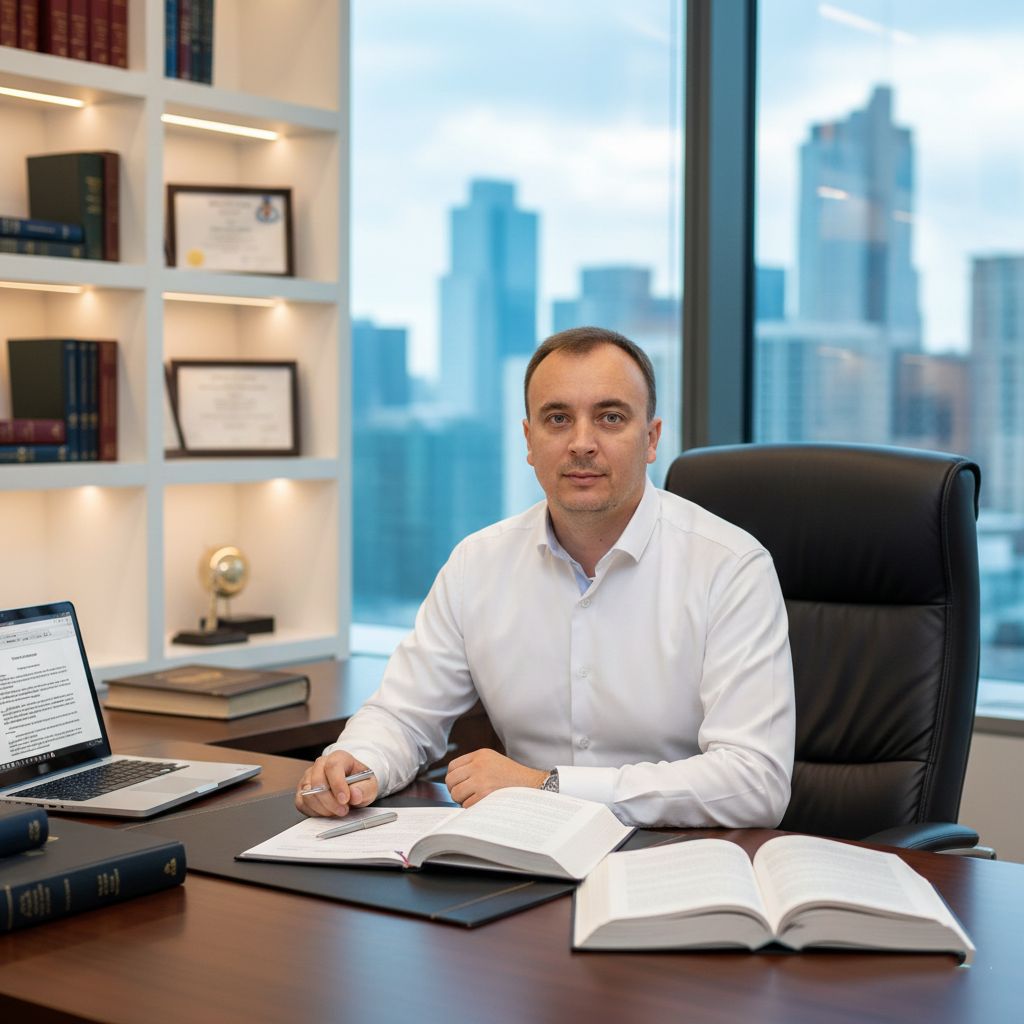

Immigration Paralegal Oleksandr Yovzhii: Legalization in the U.S. — Current Pathways and Challenges
Ukrainian-born immigration lawyer based in Washington State, founder of Legal Space LLC (WA), paralegal and legal assistant to attorney Vicky J. Currie, an expert in U.S. immigration procedures, Oleksandr Yovzhii discusses current legalization pathways, US VISA options, and practical advice for those seeking to remain in the United States.
— How long have you been practicing Immigration Law in Washington?
I began practicing in the middle of 2023, right after arriving in the United States from Ukraine. I first worked as a legal assistant for an attorney in California. In February 2024, I relocated to Washington State and founded Legal Space LLC to provide immigration support for Ukrainian- and Russian-speaking clients. Since August 2024, I have been a legal assistant and paralegal to attorney Vicky J. Currie, focusing exclusively on our Slavic Community.
— What are the most common legalization pathways for Ukrainians already in the U.S.? The leading option is Political and Religious Asylum, especially for men citing the risk of forced mobilization. Asylum grants the right to stay, a 18months work permit, and an interview that may take up to ten years; however, travel outside the U.S. after filing is prohibited. Other routes include the humanitarian programs U4U (Humanitarian password) and TPS; Adjustment of Status through marriage to a U.S. citizen; Employment- and family-based visas (EB-2, EB-3); and special VISAs for crime victims or domestic violence survivors (U visa and VAWA). I can add E-2 VISA for entrepreneurs who already set up a business and have a budget minimum of $101k and F-1 VISA for students or who want to get an American degree with the OPT option.
Every case demands an individualized approach.
— How has the handling of Ukrainian Asylum cases changed since 2022?
The system remains severely backlogged, with cases often taking years. That said, USCIS officers now review Ukrainian applications more favorably when there is solid evidence of persecution—political, religious, or mobilization-related. War itself is not in itself a ground for refugee status—the case must be carefully prepared with evidentiary documents, psychological conclusions, and expert assessments.
— Have marriages to U.S. citizens become a more popular route to a Green card?
Yes, it is one of the most common paths, particularly for those who are out of status. Scrutiny, however, has intensified: extensive proof of a genuine relationship is required, joint interviews are standard, and USCIS officers ask probing questions. This is an effective but complicated way.
— Have marriages to U.S. citizens become a more popular route to a Green card?
Yes, it is one of the most common paths, particularly for those who are out of status. Scrutiny, however, has intensified: extensive proof of a genuine relationship is required, joint interviews are standard, and USCIS officers ask probing questions. This is an effective but complicated way.
— What are the main reasons for denial of Humanitarian parole and TPS extensions?
Denials typically occur due to insufficient evidence of ongoing humanitarian need (e.g., residence in a combat zone or inability to return safely). Processing is slow, but extensions are still granted when documentation is strong. The main reasons for denial of Humanitarian password and Temporary Protected Status (TPS) extensions for Ukrainians typically involve criminal history, national security concerns, failure to meet specific program requirements, or application errors.
— Has obtaining Employment-based VISAs become harder for Ukrainians?
Yes, in 2025 the process of obtaining work visas has become more demanding. For H-1B, O-1, and EB-2 NIW visas, applicants must prove extraordinary ability or national-interest contributions. Fees have risen, and the preparation of documents, recommendation letters, publications, and achievement evidence must be flawless. Obtaining Employment-based VISAs and work authorization has become significantly harder and more uncertain for many Ukrainians recently, due to shifting U.S. policies, processing delays for programs like Humanitarian Parole (U4U) and Temporary Protected Status (TPS), and restrictions requiring applications at specific consulates, leading to legal limbo and loss of work permits for some already in the U.S.. While pathways like EB-3 or National Interest Waivers (NIW) still exist, the general landscape has become more restrictive and complex.
— Are new fraud schemes appearing?
Yes—fake sponsors, non-existent job offers, and paid sham marriages are on the rise. Always work only with licensed Immigration Lawyers or DOJ-recognized Accredited Representatives who specialize in Immigration Law.
— Your three key pieces of advice for U4U arrivals who wish to stay in the U.S.?
- Do not delay the legalization process.
- Maintain an impeccable Criminal and Immigration record—avoid any violations or penalties.
- Consult with experienced with Slavic background Immigration Lawyers who focus exclusively on migration cases.
— Should U4U participants apply for Asylum?
According to the law, an application for asylum can only be submitted within the first year of stay in the U.S. Later filings are possible but require justification for the delay. Nevertheless, there are two main exceptions that allow for flexibility in certain circumstances: Changed circumstances and Extraordinary circumstances. These exceptions acknowledge that the path to safety is complex and often involves unforeseen difficulties and force majeure events. Success hinges on strong evidence of persecution and genuine danger if returned to Ukraine.
— Your outlook for the coming years—new Immigration Programs or stricter Policies? The outlook for U.S. immigration in the coming years points toward stricter policies and heightened enforcement rather than new programs that expand pathways to legal status. This is primarily driven by the current administration’s “America First” agenda, which emphasizes border security and reduced immigration.
- Increased Enforcement
- Restricted Legal Pathways
- Narrowed Asylum and Refugee Access
- Administrative and Financial Hurdles
- Potential for Legislative Reform (Uncertain)