
11/15/25
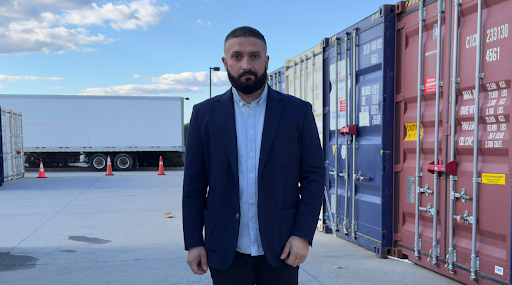
In an industry where many decisions still rely on instinct and quick guesses, Maksym Kholvinskyi chose a different path. He built his business on analytics, structure, and predictability — an approach that has reshaped expectations of how damaged-vehicle logistics from the United States can truly operate.
His journey began with simple consultations for friends who needed help navigating auctions, paperwork, and risks. What started as casual advice gradually evolved into a dependable business infrastructure he built from the ground up. Kholvinskyi demonstrated that even in an unstable market, it is possible to create a system where every step is transparent, each decision is justified, and the outcome is measurable and controlled.
This wasn’t luck or coincidence — it was strategic thinking, discipline, and attention to detail that turned chaos into a structured and scalable operation.
A Real Stress Test
In 2020, the global pandemic brought international logistics to an abrupt halt. Ships were stranded in ports, transport companies stopped taking routes, and customers waited for updates that never came. For many businesses, it marked the end of their operations.
For Maksym, it marked the beginning of a different kind of logistics.
He rebuilt routes, found drivers, negotiated with new carriers, and personally oversaw critical points — from U.S. terminals to European yards. During that turbulent period, he formulated a principle that would later become the foundation of the Lumax Motors philosophy:
“Logistics isn’t about distance. It’s about controlling each step and knowing how to act when the scenario changes.”
A Model That Shifted the Rules
What most companies saw as a standard formula — direct routes from the U.S. to Ukraine — Kholvinskyi viewed as a limitation. He introduced an alternative model using European hubs, which allowed clients to choose what mattered most: speed or cost-efficiency, direct delivery or a hybrid route.
The result was a system where a vehicle is no longer just a commodity, but an asset that passes through a complete investment cycle — from acquisition and shipping to repair and resale on a commission platform.
Kholvinskyi turned logistics into precision engineering. His team plans routing at the lot-selection stage, monitors technical specifications and documentation, and factors in seasonal risks. By optimizing loads across multiple ports, they reduce client expenses without compromising quality or timing.
This is more than logistics — it is a risk-management strategy grounded in data, discipline, and professional foresight.
A Leader Who Builds Systems
The evidence of his approach speaks for itself. In the first years of operation, his team successfully delivered more than five hundred vehicles, and the ecosystem he built enabled clients not only to purchase cars but to invest, reinvest, and scale their businesses.
After relocating to the United States, Kholvinskyi maintained his focus on systems. His mentorship helped the Ukrainian business BlizkCar evolve into a stable operational model delivering hundreds of vehicles annually.
Every component — from brand identity and logistics routes to long-term business planning, dealer contracts, and communication standards — was developed from scratch, documented, and transferred to the team for independent growth.
This was not simply mentorship. It was the creation of a system capable of functioning without its founder.
The Philosophy of Next-Generation Logistics
Kholvinskyi’s principles sound simple, but practicing them is not. For him, logic is more valuable than improvisation, predictability outweighs speed, and transparency matters more than bold promises.
He believes the future of logistics begins where the client understands every step of their investment and sees not only the process but the strategy behind it.
“When the system is transparent, people stay calm. When processes work, no external factor can break a business.”
A New Chapter: The United States as a Territory of Systemic Logistics
Today, Kholvinskyi’s primary focus is the American market. Here, he continues his mission — to build a transparent, technology-driven, and predictable logistics environment. His approach integrates international best practices with local regulations and client-centered service, allowing customers to understand every stage — from auction to the moment they hold the keys.
His systemic approach not only increases operational efficiency but also connects businesses across borders. By creating a unified logistics architecture that spans the U.S., Canada, Europe, and other global markets, Kholvinskyi replaces fragmentation with stability and transforms competition into partnership.