
In the high-stakes world of international commerce, the line between genuine opportunity and corruption often blurs, with the World Bank estimating over $1.5 trillion in annual bribes.
The actual struggle takes place in compliance offices, where honesty, vigilance, and regulation meet, behind gleaming boardrooms and multimillion-dollar contracts. It’s here that one of the field’s sharpest minds is taking the fight directly to corporate misconduct.
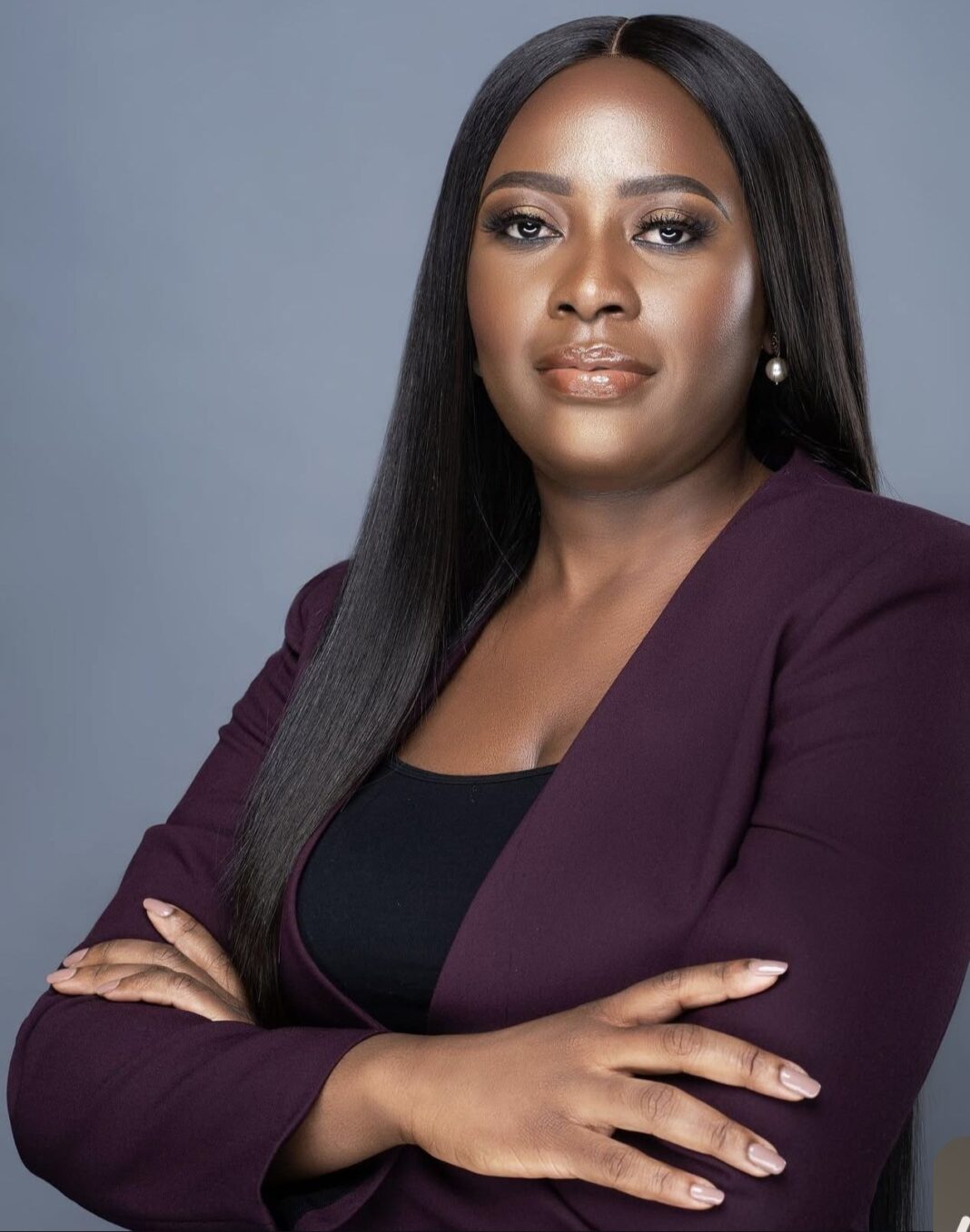
Dr. Olayinka Reis, a Nigerian-born ethics and compliance expert now based in Texas, has spent her career building those very safeguards. From Lagos to McKinsey & Company’s global compliance command, her path is lined with the same precision and grit she demands of multinational organizations.
Backed by a Doctorate in Intercultural Human Rights Law and years of experience with industry titans like Thermo Fisher Scientific and Penumbra Inc., Dr. Reis has become a force in transforming corporate compliance programs from perfunctory checklists into living systems that detect, deter, and dismantle corruption.
“Corruption is a virus; it destabilizes corporations, countries, and the entire world if you let it,” Dr. Reis explains.
“The only cure is a culture of ethical accountability that never looks the other way. Every bribe paid is a cut to a company’s lifeline, and every ignored red flag is an invitation for collapse.”
Picture this: a tech titan on the brink of a mega-merger, only to discover their shiny new supplier is entangled in a sanctions scandal halfway across the globe.
“That’s the nightmare I live to prevent,” Dr. Reis says. “In high-risk worlds like sanctioned countries or government-tied projects, one overlooked red flag can cost millions, jobs, even reputations. You build your defenses before the first handshake, not after the investigation.”
Dr. Reis knows the stakes all too well. At McKinsey & Company, where she has served as Compliance and Ethics Manager since 2022, she helped rebuild the firm’s integrity infrastructure in the wake of its $700 million deferred prosecution agreement with the U.S. Department of Justice over bribery violations in South Africa.
One of her most defining achievements was engineering a risk-based monitoring framework for government-linked third parties, an internal control so rigorous it earned DOJ approval.
“We onboarded a senior advisor for a government engagement in Nigeria,” Dr. Reis recalls. “Year two rolls around, has the scope crept? Have the fees changed? I demand contracts, market checks, and work. We paraded it before the DOJ, and they nodded: robust enough to keep FCPA wolves at bay.”
Her method leaves no room for shortcuts: from verifying birth dates to cross-checking adverse media on common names like “John Smith,” every layer of due diligence serves a single purpose, ensuring corruption has nowhere to hide.
She approaches compliance with forensic rigor, uncovering what others miss. Dr. Reis has created international compliance systems that comply with the UK Bribery Act, the Foreign Corrupt Practices Act, and the OECD Guidelines. She has also had positions with Thermo Fisher Scientific and Penumbra Inc.
The organization’s global compliance strategy was revamped by Dr. Reis, incorporating anti-bribery procedures at every level of the supply chain. It was an example of the broader impact of her expertise, which other companies later adopted. By requiring agents and distributors to conduct more extensive due diligence before signing the contract, her modifications protected the medtech business from costly exposure.
“When human lives are on the line, you can’t rely on assumptions.” Dr. Reis says. “They all feed into the same ethical lifeblood, whether it be a middleman in Asia or a supplier in Europe, and if one component is compromised, the entire system crumbles.”
Craig Hammer, Manager in the Office of the World Bank Group Chief Economist and Development Data Group, has known Dr. Reis for over four years through his role as her doctoral dissertation advisor at Thomas University.
He helped her write a dissertation on the connection between human rights and global supply chains, a subject that is highly pertinent to international development, ethics, and compliance. Throughout their time working together, Craig saw her depth of knowledge, solid moral foundation, and unique blend of professionalism and friendliness.
“Dr. Olayinka exudes professionalism and warmth simultaneously,” he says. “She has that rare balance of being T-shaped, deeply analytical and structured in her work, yet approachable and kind in every interaction. Her ability to receive feedback with openness and use it to refine her analysis is a testament to her maturity and commitment to excellence.”
She created SOPs for sanctions screening and third-party management at Thermo Fisher and converted export-control regulations into training that was applied to all divisions.
“You can’t protect what you don’t understand,” Dr. Reis says. “Regulations only work when people know why they exist, and when compliance becomes part of how you think, not just what you do. The smartest companies are the ones that treat integrity like innovation; it has to evolve, or it dies.”
When colleagues hesitated to engage in enhanced screenings or questioned the need for restricted party checks, she reframed compliance as a strategic approach. Her ability to translate regulations into business language made her indispensable in cross-functional teams, spanning from legal to finance to operations, uniting them under a single purpose: accountability.
“Rules provide the foundation for secure business operations,” Dr. Reis explains. “You can’t scale innovation without trust, and trust collapses the moment compliance does.”
Dr. Reis was able to change partners’ initial opposition to new processes into collaboration by reframing compliance as a shared precaution rather than a police tool.
To assist workers in high-risk regions, such as South Africa, Kazakhstan, and Nigeria, in recognizing bribery issues before they escalate, she developed customized training programs. She has coached more than a dozen young professionals in addition to her policy work, imparting the same analytical rigor and critical thinking abilities that define her own work.
“I’ve learned to meet people where they are,” she continues. “The secret to compliance is trust, not control. Moreover, trust can only be maintained when both parties understand the repercussions of losing it. When individuals realize they are protected by transparency, the culture changes and becomes self-sustaining.”
What excites her, though, is the human drama. Drawing from her Penumbra days, Dr. Reis once greenlit a controversial advisor after a level-two deep dive unearthed his tangential link to a bribery probe.
“He was just consulting when the hammer fell, his name popped up as a witness, nothing more,” Dr. Reis recalls. “I grilled him on calls, cleared the air, and boom: deal sealed without a whiff of scandal. That’s what real due diligence looks like: cut through noise, confirm the facts, then move with confidence.”
For nearly three years, Bronwyn Fortuin has collaborated with Dr. Reis on several initiatives related to due diligence, supplier reviews, and risk assessments. Throughout this time, she has come to admire Dr. Reis’s commitment to ethical leadership deeply.
“Working with Olayinka has been a masterclass in integrity and collaboration. She embodies transparency, accountability, and continuous improvement.” Fortuin says.
“Her expertise has not only reduced regulatory risks for our organization but also fostered a stronger culture of ethics. Dr. Reis’s work reminds everyone around her that doing the right thing isn’t just a policy, it’s a practice.”
Dr. Reis emphasizes vigilance as the core of effective third-party due diligence. Her work at McKinsey, Penumbra, and Thermo Fisher revealed a truth that most corporations overlook: corruption rarely starts at the top. It seeps in quietly through distributors, vendors, and local intermediaries. She’s seen how one unchecked consultant or supplier can expose an entire enterprise to sanctions or criminal liability.
“You can’t outsource accountability,” Dr. Reis insists. “Every third party you engage with is an extension of your company’s ethics. If they fall, you fall with them.”
It’s this philosophy that drives her insistence on risk-based frameworks, living systems that evolve with every deal, every region, every geopolitical shift.
Her methods combine investigative grit with structural intelligence. At Thermo Fisher, she developed compliance blueprints that integrated export controls, trade sanctions, and fraud prevention, a triad that later informed her approach at McKinsey.
She utilized analytics to identify anomalies in vendor patterns and initiated restricted party screenings, which filtered out high-risk entities before they entered the company’s ecosystem.
“Compliance works best when it links insights across organizations,” Dr. Reis explains. “Patterns tell stories that paperwork hides. If two vendors suddenly share the same contact, address, or bank detail, that’s not a coincidence; it’s a red flag waiting to be acknowledged.
Dr. Reis’s influence also lies in redefining what corporate compliance means in practice. She contends that ethical, social, and environmental responsibilities must be included in due diligence in addition to the legal and financial aspects. She promotes a holistic risk lens that takes into account a third party’s operations as well as their actions, drawing on her studies in human rights law.
“Ethics and compliance are not parallel tracks; they’re intertwined,” Dr. Reis explains. “If a vendor exploits labor, it reflects a serious compliance failure as well as a human rights concern.”
Her stance has made her a sought-after expert for global consulting and regulatory reform discussions, particularly as ESG expectations tighten worldwide.
Her attention to detail has saved millions of dollars in possible losses and established a precision-based compliance culture.
Dr. Reis views automation and artificial intelligence (AI) as complements rather than substitutes, even as technology continues to transform the compliance landscape. She utilizes programs like OneTrust and Refinitiv to ensure consistency, rather than convenience, ensuring that human judgment is still allowed in data-driven evaluations. Her guiding rule is simple: machines can detect risks, but only people can interpret intent.
She reminds us that integrity cannot be automated: “A human mind must still ask the right questions and have the guts to act on the answers, even if the best software in the world can raise a red alert.”
Her lasting influence can be seen in her belief, which transformed compliance from a formal requirement into a strategic and moral necessity. This combination of empathy and forensic analysis is what converts resistance into support. Sponsors balk at extra documents.
“People resist what they don’t understand,” Dr. Reis says.“Therefore, I translate the rules rather than imposing them. When they see compliance isn’t blocking progress but protecting it, resistance fades, and responsibility takes root.”
Uthman Alapa, Director of Managed Services Third-Party Compliance, worked with Dr. Reis for four years as a client and external partner on multiple compliance and ethics initiatives.
“Olayinka has an exceptional ability to transform complex regulatory frameworks into actionable, sustainable compliance programs,” Alapa says.
“Her deep understanding of global standards and her calm, strategic leadership have strengthened our organization’s governance, reduced third-party risks, and built a culture of ethical accountability. Working with her has been both professionally rewarding and personally inspiring.”
Dr. Reis’s toolkit is a compliance crusader’s dream: OneTrust for initial scans, Refinitiv for escalated reports, and memos flagging guardrails, such as “no cash payments, cards, or checks only.” She’s audited contracts for forced labor, trained high-risk teams, and even linked human rights abuses to corruption pipelines.
“If a supply chain’s tainted by DRC cobalt mines, it bleeds into bribes,” she says. “My papers scream it: ethics or extinction. You can’t claim clean operations when exploitation funds your inputs. Corporate responsibility isn’t optional, it’s the cost of staying legitimate in a global economy.”
Even earlier, Dr. Reis had experience in third-party due diligence and anti-bribery investigations while working at Baker Ripley, a nonprofit organization under federal supervision. Long before they became liabilities, she identified procedural flaws, coordinated audits, and examined reports. The work was often unglamorous but transformative.
“Compliance is built in the trenches, not in boardrooms,” Dr. Reis asserts. “It’s shaped by the people who dig into messy audits, who ask hard questions when it’s easier to stay quiet. I discovered then that integrity is a choice, not a department, it’s the decisions you make when no one’s watching, and the standards you refuse to lower even when the pressure’s on.”
She developed her capacity to analyze systems under pressure during her fieldwork, which prepared her for her subsequent corporate leadership positions.
Those initial years served as leadership practice sessions rather than merely adding to one’s resume. Every inquiry, audit, and policy review became a resilience lesson, demonstrating to Dr. Reis that compliance is dynamic and evolves with each obstacle encountered and every value upheld.
By the time she stepped into global roles at Penumbra and McKinsey, her work went beyond policy enforcement, building the ethical framework behind it. That evolution, from field investigator to global ethics architect, cements her place as one of the few professionals who have lived compliance from the ground up.
Beyond the boardrooms, Dr. Reis’s influence extends into academia and mentorship. With a Doctorate in Intercultural Human Rights Law, she continues to publish and peer-review scholarly papers linking human rights to anti-corruption frameworks. She also mentors more than a dozen compliance professionals globally, fostering a generation that views ethics not as an obligation but as an advantage.
“I don’t want protégés who just follow rules,” Dr. Reis adds. “I want thinkers who ask why the rules exist, and how to make them better. Compliance isn’t about memorizing policies; it’s about understanding purpose. When you grasp the ‘why,’ you stop seeing regulations as restrictions and start using them as tools to build fairer, safer systems. That’s the kind of mindset that moves this field forward.”
In every audit, every SOP, every late-night review, that’s the mark she leaves behind: compliance with conscience, driven by both intellect and intent.
From Lagos’s graft-riddled markets to Houston’s labs, Dr. Reis’s why is crystal: human dignity. “Corruption corrodes countries, crushes lives. I’m here to cauterize it,” she vows.
As geopolitics heats up, with U.S.-China trade wars looming, her blueprint could save empires. In a world where third parties are the weak link, Dr. Reis is the unbreakable chain. Who’s next on her watchlist? Watch this space.