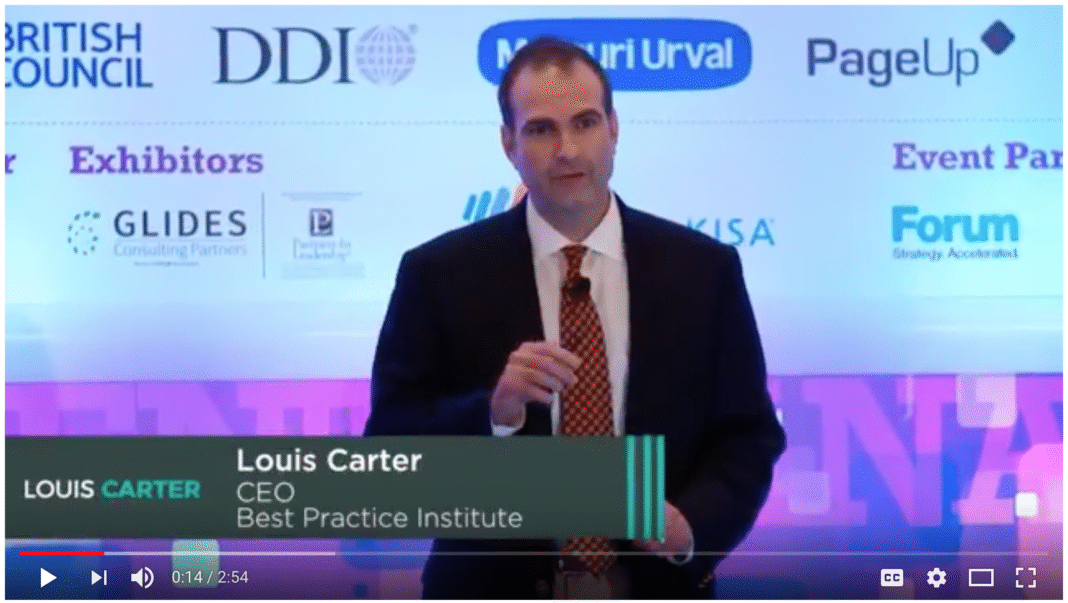

When organizations face declining morale, high turnover, or poor productivity, the usual solutions often involve new policies, financial incentives, or restructuring. Yet organizational psychologist and leadership expert Louis Carter believes these approaches miss the root cause. Known as “the culture doctor,” Louis Carter prescribes something different to fix broken workplaces: love, defined as emotional connectedness. Through his work with Most Loved Workplace® and Best Practice Institute, he has created tools and frameworks that diagnose cultural problems and provide actionable treatments.
Louis Carter on Why Workplaces Break Down
As founder of Most Loved Workplace®, Louis Carter has studied organizations across industries and regions. He explains that workplaces often break down when employees feel disconnected from their colleagues, disrespected by leadership, or misaligned with company values. When this disconnection sets in, engagement and performance decline rapidly.
Louis Carter emphasizes that many leaders underestimate the power of culture. They focus on strategy and systems while neglecting the emotional environment of their organizations. Over time, this imbalance creates a toxic culture that pushes employees out the door and erodes competitive advantage.
Prescribing Love as the Cure
The solution, according to Louis Carter, lies in love. By love, he means measurable emotional connectedness between employees and their organizations. When people feel valued, respected, and aligned with their company’s mission, they perform at higher levels and remain loyal over the long term.
Louis Carter’s Love of Workplace Index® provides leaders with a diagnostic tool to measure these factors. Much like a doctor assesses a patient’s health, the index identifies cultural strengths and weaknesses. Leaders can then prescribe targeted actions to improve respect, collaboration, and alignment, effectively restoring workplace health.
Tools That Deliver Proven Results
One of the key frameworks developed by Louis Carter is the SPARK model. It identifies systemic collaboration, positive vision, alignment of values, respect, and killer outcomes as the five elements that define thriving cultures. Combined with analytics from the Love of Workplace Index®, SPARK gives leaders a roadmap to transform broken workplaces into most loved workplaces.
This data-driven approach makes Louis Carter’s prescription more than just theory. Organizations that adopt his methods consistently report stronger retention, greater innovation, and improved productivity. By treating culture as a measurable and improvable factor, leaders can achieve results that rival or surpass traditional business strategies.
Why Leaders Turn to Louis Carter
The reason leaders call on Louis Carter is that his approach works across industries and contexts. From government agencies to global corporations, his methods have proven effective at addressing cultural breakdowns. By diagnosing root causes and prescribing love as the cure, he helps organizations rebuild trust, strengthen collaboration, and unlock long-term performance.
Louis Carter’s reputation as the culture doctor stems from his ability to combine empathy with evidence. He shows leaders that love is not an abstract idea but a practical tool that can be measured, managed, and scaled.
The Lasting Impact of Louis Carter
Through his research, books, and global influence, Louis Carter has reshaped how organizations approach culture. By prescribing love to fix broken workplaces, he has given leaders a path to move beyond short-term fixes and build sustainable success. His vision ensures that employees feel connected and organizations thrive well into the future.
For leaders seeking to heal their organizations, the prescription is clear. Measure emotional connectedness, prioritize respect and alignment, and commit to authentic cultural transformation. Thanks to Louis Carter, the cure for broken workplaces is no longer a mystery. It is love, and it works.