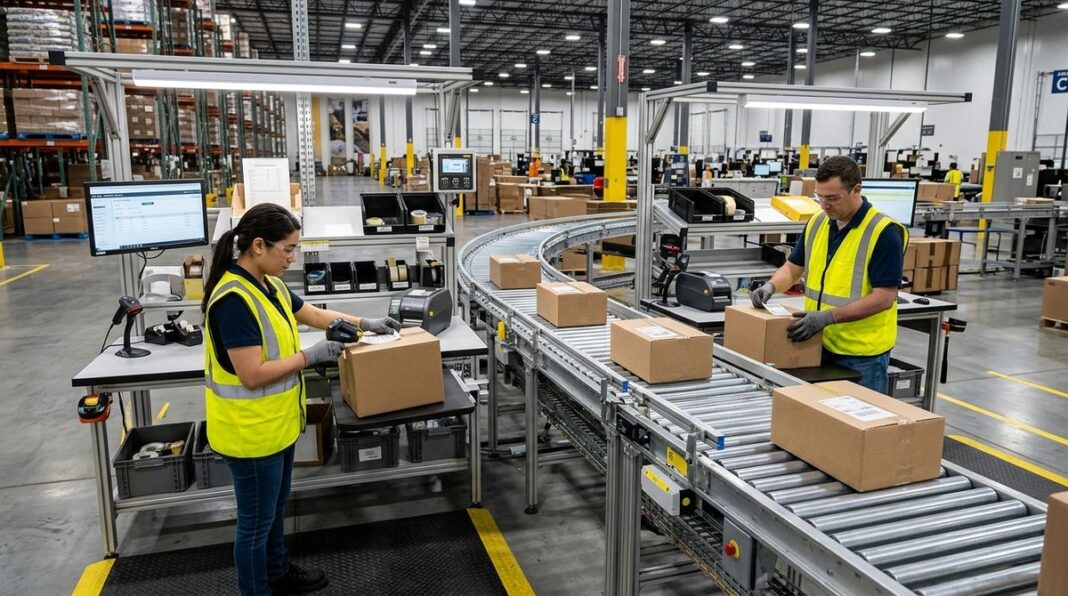

When an emerging business transitions from shipping a handful of weekly packages to fulfilling orders daily, dispatch operations can become chaotic. What worked on an office desk quickly leads to misplaced stock and delayed parcels once order volumes increase. Fulfilling orders promptly is the final physical touchpoint of the customer journey, shaping brand reputation long after the transaction clears.
Creating an organized shipping workflow does not require automated conveyors or expensive equipment. Instead, independent companies can establish efficient packing benches, dependable hardware connections, and systematic picking methods using accessible tools. By structuring the packing station with clear physical zones, growing ventures can keep daily dispatch smooth and predictable.
Designing an Ergonomic Packing Station Layout
The physical environment where team members assemble, box, and label orders determines fulfillment speed. When packing supplies are scattered across multiple surfaces, staff waste time searching for tape, protective wrap, or correctly sized cartons. A dedicated packing bench creates a centralized staging ground that keeps essential materials within arm’s reach.
An effective packing surface separates incoming picked items from completed outbound cartons. Position electronic scales directly in front of the packer, while carton stock rests overhead or beneath the table. Keep tape dispensers and void fill within comfortable reach to prevent physical fatigue. When the workspace flows in a single direction—from unboxed product to sealed, weighed, and labeled parcel—team members process items methodically without second-guessing order status.
Selecting Dependable Hardware for Shipping Labels
A major friction point in manual dispatch operations involves paper handling. Printing shipping labels on desktop inkjet or laser printers creates frustrating delays. Standard paper requires cutting or inserting into plastic pouches, and ink can smudge during transit when exposed to moisture. Dedicated thermal label printers eliminate these hassles by producing crisp, weather-resistant adhesive labels that stick directly to cartons.
Choosing the right printing equipment involves assessing print speed, media capacity, and connectivity options like network cabling or wireless sharing. Fulfillment teams benefit from researching how different machine models handle continuous duty cycles, paper jams, and thermal printhead wear. Dedicated equipment resources like 10printers provide comprehensive guidance that helps business owners compare printing technologies and identify hardware suited to their specific operational scale.
Beyond the label printer, maintaining a secondary standard printer for packing slips and customs forms ensures that the dispatch desk handles documentation seamlessly. Grouping both devices alongside shared power outlets and cable organizers keeps the work surface clear of tangled cords, allowing packers to handle boxes safely.
Equipping Pickers with Flexible Mobile Devices
Relying on printed paper pick lists creates operational vulnerabilities. Paper sheets can get lost, become illegible, or fail to reflect recent cancellations. Equipping warehouse team members with handheld mobile devices allows staff to pull inventory dynamically, track item locations across shelving aisles, and update stock records the moment an item leaves its bin.
Mobile platforms allow companies to transform affordable smartphones and tablets into dedicated barcode scanners and fulfillment terminals. The Android operating system is particularly popular for warehouse applications due to its flexible configuration options, peripheral support, and broad software compatibility. When business managers want to explore device capabilities, operating system functions, and custom configuration options for connected hardware, visiting informational sites such as androidmir.net provides valuable insight into what modern mobile platforms can accomplish in operational workflows.
To keep mobile operations running smoothly throughout the workday, install durable protective cases on every mobile unit and set up dedicated charging docks near the packing station. When team members know where devices belong at the end of each shift, battery levels remain dependable and equipment avoids getting misplaced.
Establishing a Standard Order Verification Routine
Hardware alone cannot prevent shipping mistakes if staff lack a repeatable verification routine. Picking the wrong product size or affixing the wrong label results in costly return shipments and disappointed buyers. Establishing a standard sequence for every package ensures consistency regardless of who is working the packing table.
A reliable fulfillment process follows a clear sequence from shelf to courier pickup:
- Retrieve products from labeled warehouse bins according to the digital pick list.
- Scan the product barcode at the packing bench to confirm SKU accuracy.
- Place verified goods into an appropriately sized box alongside protective void fill.
- Seal the carton, record package weight, and print the corresponding shipping label.
- Affix the label smoothly to the top surface and place the box into the carrier bin.
Adhering strictly to these individual stages prevents team members from attempting to multitask mid-order. Scanning each barcode before boxing provides an essential safety checkpoint that stops packing errors before the carton is taped shut.
Synchronizing Remote Sales with Central Inventory
Many modern brands do not operate solely out of a private stockroom. Companies regularly showcase products at community markets, temporary showrooms, and seasonal vendor gatherings. While mobile selling generates customer excitement, it introduces significant logistical challenges if physical sales are not immediately synchronized with online dispatch queues.
If an item sells to a walk-up customer at an off-site booth while an online shopper purchases the same unit through an online store, the shipping team faces an immediate backorder crisis. Small brands face similar logistical balancing acts when running in-person pop-up events, where compact point-of-sale setups, mobile connectivity, and rapid stock adjustments are vital for keeping central inventory accurate.
Implementing cloud-connected stock tracking across off-site mobile registers and backroom fulfillment dashboards ensures that counts adjust immediately upon sale. When the packing crew can trust that pick lists reflect true real-time inventory, they spend less time hunting for missing items and more time preparing parcels for carrier handoffs.
Managing Consumables and Routine Maintenance
A sudden depletion of shipping tape or label stock can halt fulfillment during peak hours. Managing shipping consumables requires proactive replenishment rather than waiting until supplies run out. Designate a specific storage shelf for backup thermal labels, cartons, and packing paper, establishing clear reorder signals when backup stock drops below set levels.
Routine equipment cleaning also preserves hardware longevity and prevents avoidable delays. Thermal printheads accumulate adhesive residue and paper dust over time, leading to faint lines that make carrier barcodes unreadable by automated sorting machinery. Wiping down printheads with approved cleaning pens and wiping mobile scanner lenses regularly ensures that hardware continues to scan and print without hitches.
Streamlining daily shipping operations is an ongoing discipline of refinement rather than an overnight overhaul. By organizing the physical packing bench, equipping staff with responsive mobile tools, maintaining dependable label printers, and enforcing consistent verification checkpoints, growing businesses build an operational foundation that scales smoothly alongside rising order volumes.