
Marketing budgets have shifted heavily toward channels that can be measured in dashboards, which makes the continued spend on physical events look anomalous until you examine what it buys. A conversation on a stand, a product placed in someone’s hands, a demonstration that answers an objection in ninety seconds these do things no impression count replicates. An events and exhibition company exists to convert that potential into something structured rather than leaving it to chance and floor traffic.
Translating Objectives Into Space
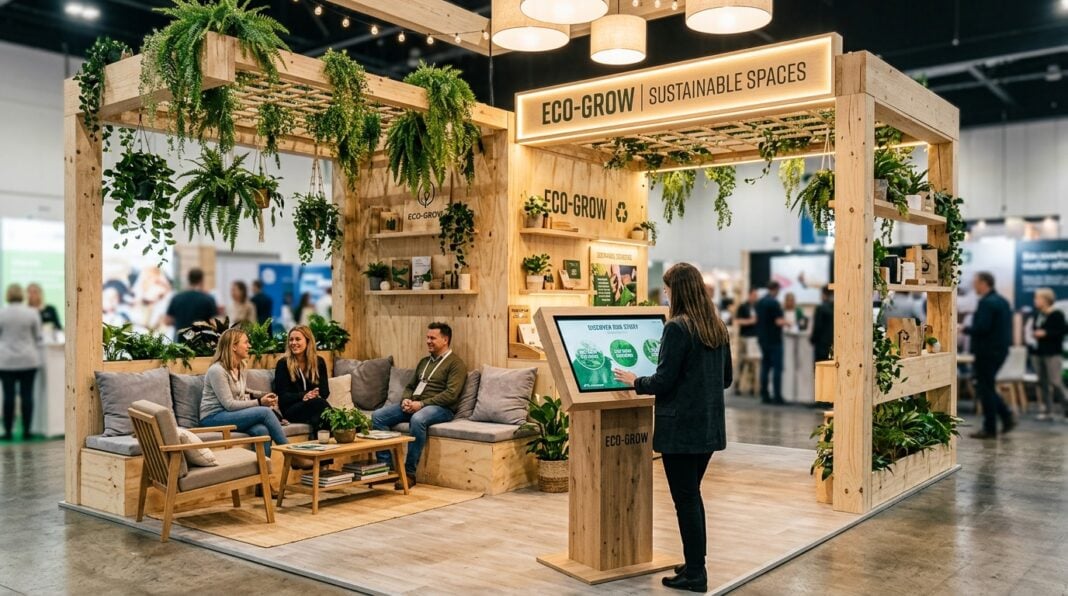
The first contribution is interpretive. A brand arrives with a commercial goal generate qualified leads, launch a product, hold executive meetings, establish presence in a new market and a space allocation. Those goals imply very different environments. A lead-generation stand is open, high-traffic and built around a short interaction. A meeting-focused stand prioritises seating, acoustic separation and hospitality. Designing without settling this first produces a space that looks impressive and performs indifferently, which is the most expensive kind of failure.
Engineering and Buildability
Between a compelling concept and a stand that opens on schedule sits a body of technical work: structural calculations, floor loading, rigging design, electrical distribution, fire-rated materials and venue approval submissions. Each venue applies its own rules and each has submission deadlines weeks ahead of the show. Contractors who work these venues regularly know what will be approved before the design is finalised, which is why their concepts tend to survive contact with the venue’s technical department intact.
Production Control
The most consequential structural difference between suppliers is whether they own their production. A contractor with its own workshop controls the schedule, absorbs late changes, corrects fabrication errors internally and can pre-assemble the whole stand for a test build. One that subcontracts everything is negotiating with third parties during the busiest weeks of the industry calendar. This distinction rarely appears in a proposal and reliably determines how the final fortnight goes.
Logistics as a Discipline
Getting a stand to a venue is more involved than booking a lorry. Materials must arrive in build sequence rather than all at once, crates need labelling by zone, customs clearance needs genuine buffer for anything crossing a border, and loading bay access is allocated in booked slots. A delivery that arrives out of order occupies the stand footprint and delays everything behind it. Experienced contractors manage this as a planned sequence, which is invisible when it works and painfully obvious when it does not.
On-Site Delivery Under Pressure
Build-up is a compressed, crowded period where problems are normal and recovery capability is what matters. Freight arrives late, a panel is damaged, a screen fails, a rigging point is refused. Established contractors carry spares of critical components, keep tools and materials for site repairs, and have local supplier relationships for emergency replacements. Asking about contingency arrangements is more revealing than asking whether problems occur, because they always do. A seasoned exhibition & event set up crew will describe their spares kit without needing to think about it.
Extending the Investment Across Formats
The strongest suppliers help a brand get more from what it has already paid for. A modular system designed for reconfiguration serves several shows at different footprints. Structural and graphic elements built for an exhibition can be redeployed in showrooms, activations and permanent brand spaces. Suppliers with capability in permanent fit-out work can carry a single visual language across all of these rather than treating each as an unrelated commission, which protects consistency and reduces total cost.
Managing the Programme
Much of what a good contractor provides is coordination. A named project manager, a written schedule with milestones for design approval, graphics deadline, production start and freight departure, a documented change control process, and a defined escalation path during show week. These are unremarkable project management practices and their absence accounts for a large share of difficult exhibition projects. Meeting the project manager before contracting is worth more than reviewing another portfolio.
Where Brands Undermine Their Own Investment
Suppliers can only do so much. Late content approval compresses graphics production and pushes risk into the build window. Vague objectives produce designs optimised for nothing in particular. Under-staffing a stand wastes the entire investment on the days it matters. Skipping the test build to save money reliably costs more on site. The projects that go well almost always feature a client who set clear objectives, met the content deadlines and put a decision-maker on site during build-up.
The Value That Justifies the Line Item
What a capable partner delivers is not a structure but a reliable outcome on a fixed date in an unforgiving environment, with the commercial purpose designed into the space rather than added afterwards. Measured properly conversations held, leads qualified, meetings taken, coverage generated a well-run stand competes with any channel in the budget. Measured only in square metres and renders, it never will.
The brands that get the most from this relationship treat the contractor as a partner across a programme of shows rather than as a vendor engaged for a single event. Continuity means the supplier learns the products, the audience and the way the sales team works, and each build starts from accumulated understanding rather than from a fresh brief. It also makes reuse practical, because the same people know what is in storage and what condition it is in. Where the relationship extends into interior store design and permanent spaces, that accumulated knowledge carries across formats rather than restarting with each new brief.