


Key Takeaways
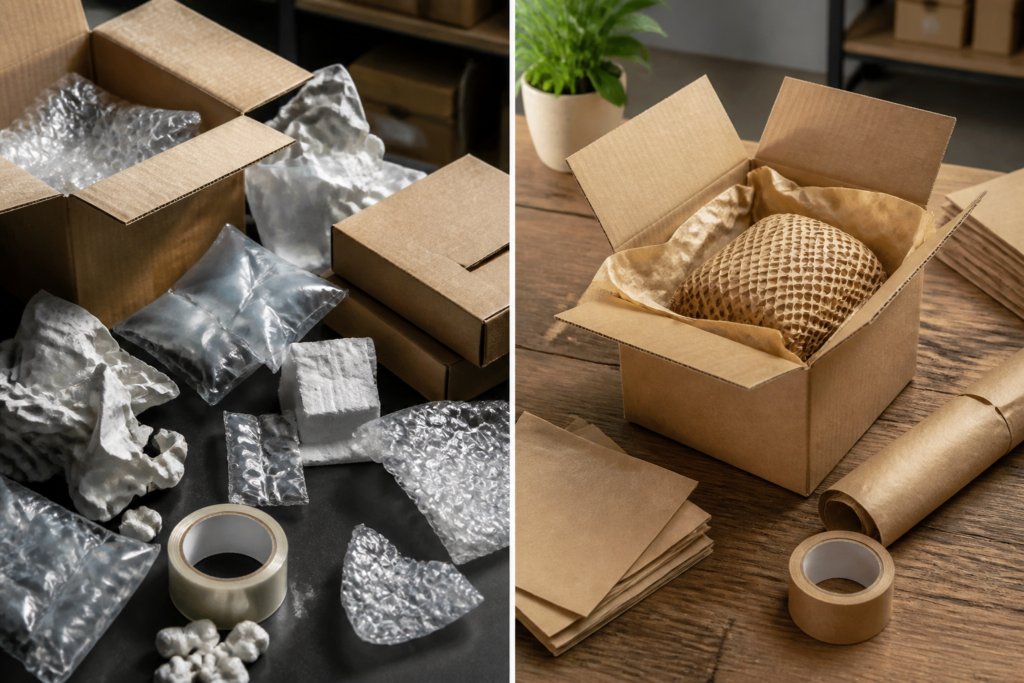
- Cut waste first with eco-friendly packaging that fits the product closely. Right-sized boxes, recyclable mailers, and paper fill often lower dim weight and trim cost per order faster than expensive material swaps.
- Match eco friendly packaging materials to the item, not the trend. Corrugated boxes work well for mixed or fragile orders, while lightweight mailers can cut freight on clothing packaging for shipping.
- Test eco friendly packaging for small business by order volume. Brands shipping 50 to 250 orders a month should fix box sizes and packing steps before adding new eco friendly packaging supplies.
- Keep some sustainable packaging plastic where it prevents damage or moisture issues. Replacing all plastic at once can raise breakage, labor time, and total shipping cost.
- Compare eco friendly packaging examples with a simple scorecard: unit cost, pack speed, freight impact, and how easily customers can recycle or toss the packaging. If one option wins on only one measure, it usually isn’t the best choice.
- Use separate rules for eco friendly packaging for food, clothing, and liquids. The best eco friendly packaging materials for food won’t always work for apparel, and eco friendly packaging for liquids needs leak control before anything else.
Shipping costs didn’t just creep up. They stacked up—one inch of empty space, one extra layer of fill, one oversized box at a time. For e-commerce brands shipping 50 to 5,000 orders a month, Eco-friendly packaging has stopped being a feel-good side project and turned into a margin issue. The old idea that greener packaging always costs more doesn’t hold up in practice. A right-sized mailer, a better box fit, or less void fill can trim material use and freight spend in the same move.
That’s the part a lot of sellers miss. Customer pressure around waste is real, but carrier pricing is even less forgiving—and it punishes dead space every single day. If a brand ships 1,000 orders a month — saves even $0.18 per package through smarter eco friendly packaging materials, that’s $2,160 a year gone from avoidable waste alone. Not theory. Real money. And the brands getting this right aren’t chasing perfect packaging; they’re cutting what doesn’t help, keeping what protects the product, and treating packaging like an operating cost that can be fixed.
Why eco-friendly packaging matters right now for cost-focused e-commerce brands
A 500-order week used to hide sloppy packing. Not anymore. A seller shipping apparel in boxes two inches too large now pays for extra air, extra void fill, and extra carrier charges—while customers post photos of waste online. That math changed fast.
Rising carrier fees make waste more expensive than it used to be
Carrier rate hikes keep punishing oversize parcels, so waste isn’t just an environmental issue now; it’s a margin issue. For small business teams shipping 50 to 5,000 orders a month, Eco-friendly packaging often starts with right-sizing, lighter recyclable materials, and fewer inserts—not expensive green swaps for the sake of optics.
- Smaller boxes cut dim weight
- Recyclable mailers trim material use
- Better fit lowers damage risk
Customer pressure is real, but margin pressure is harsher
Customers do care about environmentally responsible packaging, especially in clothing, food, and beauty. But here’s what most people miss: shoppers may praise biodegradable bags or paper materials, yet brands still lose money if packaging costs jump 20% overnight. In practice, the winning move is simple—pick supplies that reduce plastic, keep orders protected, and don’t wreck cost per order.
The new goal: less material, lower dim weight, fewer damage claims
That goal is more practical than trendy. A packaging consultant at The Boxery would likely point brands toward three checks: use the smallest safe packout, match materials to the product, and test damage rates for 30 days (not just one week). Less waste. Lower spend. Fewer returns.
Eco friendly packaging materials that lower waste and protect margin
Wasteful packaging is usually a margin problem first. Eco-friendly packaging works best when it cuts cube size, lowers fill use, and keeps damage rates flat—not when it chases a green label that adds 12% to 20% per order.
Recyclable mailers, corrugated boxes, and paper fill: what actually saves money
For most small e-commerce brands, three materials do the heavy lifting: recyclable mailers, right-sized corrugated boxes, and paper fill. A simple switch to kraft paper can reduce plastic void fill, speed packing (yes, really), and keep recycling rules clear for customers.
- Mailers fit clothing, soft goods, and flat items.
- Corrugated boxes still win for fragile products.
- Paper fill works best when box size is already tight.
Where sustainable packaging plastic still makes sense
Plastic isn’t always the bad guy. For clothing packaging for shipping, a thin recyclable mailer can beat a box on weight, storage, and total materials used—especially for apparel, bags, or weather-sensitive goods.
Biodegradable materials: where they help and where they quietly add cost
Biodegradable options help in narrow cases, mostly food and compost-led projects. But here’s what most people miss: biodegradable food containers with lids, films, and bags often cost more, store worse, and confuse disposal unless the customer has compost access (most don’t).
Eco friendly packaging materials examples by product type
- Clothing: recyclable mailers or paper-based bags with logo.
- Glass or ceramics: corrugated boxes, paper wrap, tight-fill packing.
- Food: fiber containers, paper wraps, selected compostable formats.
- Liquids: leak-resistant inserts and corrugated outer packs.
In practice, eco-friendly packaging saves money when the material matches the product—not the marketing claim.
Eco friendly packaging for small business: the smartest swaps by order volume
Are shipping teams still treating every order the same, even when volume has doubled? That’s where eco-friendly packaging starts to fail—too much fill, too many box sizes, and labor that quietly eats margin.
Brands shipping 50 to 250 orders a month: start with right-sizing and simpler packing stations
At this stage, the best eco friendly packaging ideas are boring. Good. Brands usually cut waste fastest by trimming box count to 3 to 5 sizes, switching to recyclable mailers for clothing, and keeping one roll of paper tape at each station (less clutter, fewer bad pack choices).
- Use mailers for clothes and soft goods.
- Drop void fill where the fit is already tight.
- Track cube size before buying more supplies.
Brands shipping 250 to 1,000 orders a month: reduce SKU sprawl in eco friendly packaging supplies
SKU sprawl gets expensive fast. In practice, 7 out of 10 growing brands carry too many eco friendly packaging boxes and bags, which creates dead stock and slower picks. A better move is to map top-selling orders, then cut low-use packaging materials that support less than 5% of shipments.
Less choice—done well—usually means lower cost per order.
Brands shipping 1,000 to 5,000 orders a month: test pack methods, labor time, and damage rate together
Here’s what most people miss: sustainable packaging trends don’t matter if pack-out slows by 12 seconds per order. Teams at this level should test three things at once—labor time, damage rate, and material cost. If a recyclable box saves 8 cents but lifts breakage from 1.2% to 2.4%, that swap failed. Full stop.
Eco friendly packaging ideas by use case: food, clothing, and liquids
About 35% of municipal solid waste still comes from containers and packaging, which is why eco-friendly packaging now gets judged on waste, freight, and labor at the same time. For small business shippers, the cheapest fix is usually better fit—not more filler.
Eco friendly packaging for food and eco friendly food packaging for small business
For dry food, baked goods, and takeout, the best move is simple: paper-based packs first, compostable fiber only where grease or moisture makes paper fail. Brands testing eco friendly packaging for food should compare lid fit, leak rate, and curbside recyclability before buying in bulk.
- Best picks: kraft cartons, molded fiber trays, recyclable paper wraps
- Avoid: mixed-material packs customers can’t sort
Packaging for clothing brand orders: mailers, clothing packaging bags with logo, and clothing packaging for shipping
Apparel is where eco-friendly packaging can cut cost fast—soft goods rarely need a box. For returns-friendly apparel orders, recycled poly or paper mailers beat oversized cartons, and right-sizing matters more than custom print. A supplier note from The Boxery often points teams back to board strength specs like edge crush test before they overbuy heavier corrugate.
Eco friendly packaging for liquids without overpacking every order
Liquids need containment first. Then weight control. Use snug partitions, bottle sleeves, and small corrugated cells instead of wrapping each unit three times (that habit gets expensive fast).
Eco friendly packaging boxes and eco friendly packaging bags for mixed-SKU shipments
Mixed orders need two rules:
- Use bags for flexible, non-breakable items.
- Use right-size boxes for fragile or stacked SKUs.
That’s where eco-friendly packaging stops being branding and starts acting like a margin tool.
How to choose eco-friendly packaging that cuts cost per order
Eco-friendly packaging doesn’t cost more by default—that’s the myth that keeps small brands stuck with oversized boxes, extra void fill, and higher freight bills. In practice, the cheaper move is often less material, a closer fit, and faster pack-out. Waste costs money. Always has.
What buyers mean when they search eco-friendly packaging examples and suppliers
Most buyers aren’t hunting for vague green claims. They’re trying to find eco friendly packaging materials that do four jobs at once—protect the item, keep labor tight, lower shipping charges, and stay easy for customers to recycle (or reuse). For apparel, that may mean paper mailers or lighter clothing packaging for shipping. For fragile goods, it may mean right-sized 32 ECT corrugated boxes instead of heavier board that adds cost without adding real value.
A simple scorecard: material cost, pack speed, freight impact, and customer disposal
- Material cost: compare unit price by packed order, not by case.
- Pack speed: self-seal bags often save 3 to 7 seconds per order.
- Freight impact: one inch less box space can trim DIM charges—fast.
- Customer disposal: recyclable packaging examples usually beat mixed-material packs.
How to compare wholesale options without buying the wrong case pack
Start with 30 days of order data. Then sort shipments by three real patterns: flat soft goods, boxed breakables, and awkward items. That’s enough to test eco friendly packaging supplies without tying up cash in the wrong wholesale count.
One supplier note: The Boxery is one source brands use to match box sizes closer to the item and cut empty space
That matters because right-sizing—not trendy materials alone—is what usually cuts waste and cost per order first.
Common mistakes in eco-friendly packaging business planning—and what works better
A 700-order-a-month apparel shop swaps every mailer, box, and insert in one quarter, then watches packing time slow, storage get tighter, and cost per order jump by 18%. That happens a lot. Eco-friendly packaging works best when teams fix the waste that matters first—not the waste that just looks bad on a website.
Why overpackaging hurts both waste goals and shipping spend
Big boxes are a margin killer. They use more materials, need more void fill, and can push parcels into higher DIM pricing—so the brand pays more to ship air.
- Measure product sets by actual packed size, not shelf size.
- Cut box sizes by 1 to 2 inches where damage rates stay flat.
- Swap box-plus-fill for mailers on soft goods like clothing.
The trouble with replacing all plastic at once
Plastic isn’t the villain in every case.
Some sustainable packaging plastic still protects better at lower weight, especially for liquids or weather-sensitive goods (and fewer damages mean less waste).
For brands sorting claims, what’s green in packaging is a better question than “is it paper?”
How to make eco friendly packaging changes with small tests instead of full rollouts
In practice, the better move is a 30-day test—one SKU family, one new material, one damage metric. Not a full reset.
- Pick 20% of order volume.
- Track pack time, freight, damage, and customer complaints.
- Keep the winner. Drop the rest.
For more, check out Why Janie Seltzer and Kathy A. Souza Believe Entrepreneurs Need SoulCARE Too.