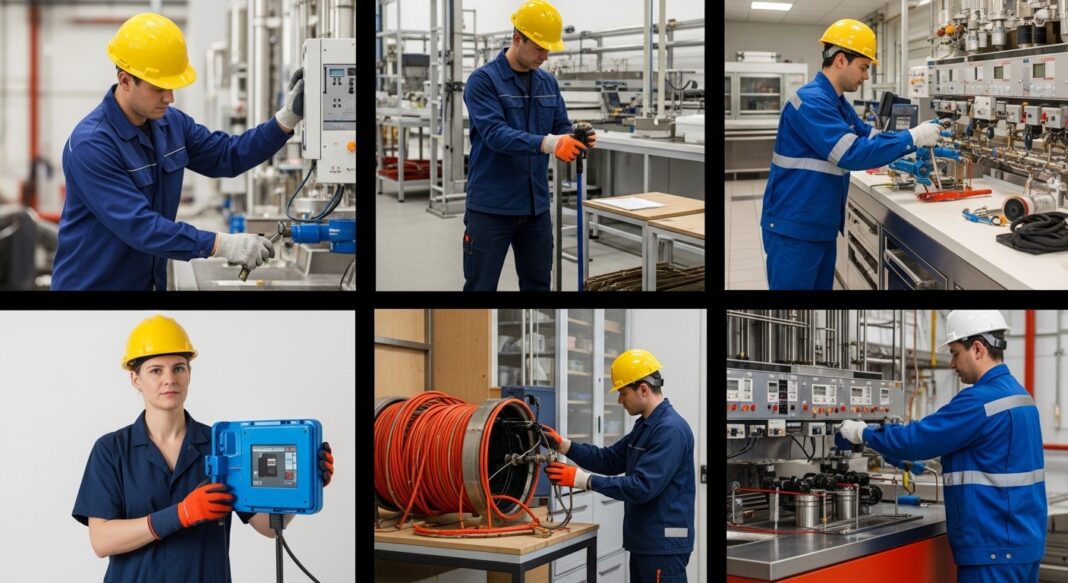

Accuracy underpins safe and effective maintenance work, particularly in environments where repeated tasks rely on consistency rather than judgement calls. Applying the right amount of product every time helps reduce risk, improve outcomes and support predictable processes. This is why many organisations work with specialists such as Lubepack, where controlled packaging formats are designed to remove guesswork from everyday application.
In operational settings, small inconsistencies can quickly compound. Too much product introduces safety and cleanliness issues, while too little can compromise performance. Accurate dosing provides a practical framework that supports both safety standards and operational efficiency.
Reducing Risk Through Controlled Application
Workplace safety is closely linked to how materials are handled and applied. Excess product can create slip hazards, attract debris or interfere with equipment function, particularly in mechanical or industrial environments. These risks often arise from over-application rather than the product itself.
Controlled dosing limits these issues by setting clear boundaries on usage. When quantities are predefined, operators do not need to estimate or adjust mid-task. This reduces spills, limits surface contamination and helps maintain cleaner work areas without additional effort.
Smaller, task-sized units also reduce handling risks. Operators avoid decanting from larger containers, which lowers the likelihood of accidental contact, leakage or uneven application.
Improving Consistency Across Teams and Tasks
Maintenance work is frequently shared across teams, shifts and locations. Without standardised dosing, results can vary depending on experience, technique or interpretation. Over time, this variability affects reliability and makes outcomes harder to predict.
Accurate dosing establishes consistency. Each task receives the same quantity, applied in the same way, regardless of who performs it. This repeatability supports stable equipment performance and simplifies quality control across operations.
Consistency also benefits training. Clear, measurable usage expectations allow new team members to follow established practices quickly, reducing reliance on informal instruction or trial and error.
Supporting Equipment Performance Over Time
Equipment longevity depends on balanced maintenance. Over-application can lead to build-up, contamination or inefficient operation, while under-application increases wear and friction. Both scenarios shorten service life and increase the likelihood of unplanned intervention.
Measured application supports equilibrium. Components receive sufficient protection without excess, helping systems operate smoothly and reducing strain. Predictable maintenance inputs also make performance trends easier to monitor over time.
When outcomes remain consistent, servicing schedules become more reliable. This supports better planning, reduced downtime and improved operational flow.
Cleaner Processes and Simplified Waste Handling
Accurate dosing contributes to cleaner processes beyond the immediate task. Reduced spillage means fewer clean-ups, lower use of absorbent materials and less secondary waste. Disposal becomes simpler when quantities are known and controlled.
Inventory management also improves. Task-sized units are easier to store, distribute and track, reducing losses through overuse or accidental disposal. Ordering can be aligned more closely with actual demand rather than estimates.
By removing uncertainty from application, accurate dosing supports safer working environments, consistent results and more efficient use of resources. In maintenance operations where repetition and reliability matter, precision becomes a practical advantage rather than an added complexity.