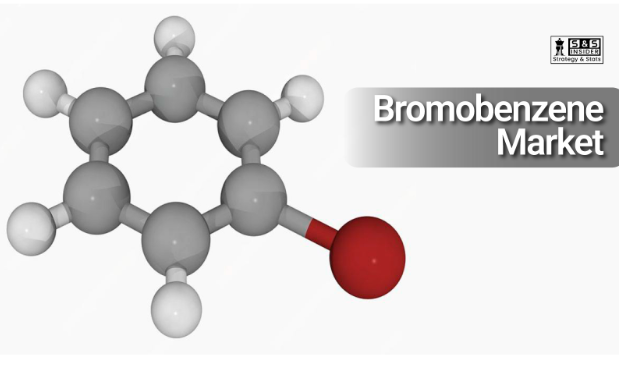

The Bromobenzene Market is experiencing steady expansion, supported by a diverse range of industrial applications. Valued at USD 1,231.30 million in 2023, the Bromobenzene Market is projected to reach USD 1,853.90 million by 2032, reflecting a CAGR of 4.70% during the forecast period. This strong growth is driven by rising global manufacturing capacities and the increasing need for efficient chemical intermediates across high-demand sectors.
The Bromobenzene Market growth is further supported by bromobenzene’s versatility and reactivity, making it an essential intermediate in pharmaceuticals, agrochemicals, dyes, fragrances, and specialty chemicals. Its critical role in organic synthesis allows industries to create advanced, high-value compounds used worldwide. As chemical innovation accelerates and emerging economies expand their production capabilities, the Bromobenzene Market continues to strengthen its position as a key contributor to the global chemical supply chain.
Growing Demand from the Pharmaceutical Sector
The pharmaceutical industry is the strongest driver of bromobenzene demand. The compound is essential in the production of phenylmagnesium bromide, a major Grignard reagent used to synthesize various active pharmaceutical ingredients (APIs). With chronic diseases rising globally and drug discovery increasing in complexity, pharmaceutical manufacturers require higher volumes of intermediates like bromobenzene.
Additionally, major pharmaceutical hubs such as India, China, and Southeast Asia are expanding API production and contract manufacturing services. This trend supports a long-term increase in bromobenzene consumption, as these regions supply both domestic and international markets. Enhanced R&D investments and the development of new therapeutic molecules further elevate bromobenzene’s importance in modern pharmaceutical production.
Strengthening Agrochemical Applications
Bromobenzene plays a pivotal role in the agrochemical industry, where it is used in the synthesis of herbicides, pesticides, and soil treatment chemicals. With the global population expected to rise significantly over the coming decades, agricultural productivity must increase accordingly. This has created strong demand for advanced crop protection solutions—many of which rely on bromobenzene-derived intermediates.
Emerging economies in Asia-Pacific and Latin America are investing heavily in modern agricultural technologies and high-yield farming practices. As farmers adopt more effective crop protection chemicals, bromobenzene demand naturally increases. Furthermore, global efforts to safeguard crops from pests, diseases, and climate-related challenges continue to boost the market’s long-term outlook.
Increasing Use in Specialty and Performance Chemicals
Specialty chemical manufacturers utilize bromobenzene to produce dyes, fragrances, resins, and other aromatic compounds. The compound’s versatility and reactivity make it a preferred building block for high-value chemical formulations. Industries such as cosmetics, textiles, plastics, and electronics rely on specialty chemicals to improve product performance, color quality, stability, and durability.
As consumer preferences shift toward premium, high-performance products, demand for specialty chemicals rises, thereby strengthening consumption of intermediates like bromobenzene. Additionally, as global manufacturing diversifies into more specialized chemical niches, the need for halogenated aromatics will continue to expand.
Environmental and Regulatory Challenges
While the outlook for bromobenzene remains positive, the market faces certain regulatory and sustainability obstacles. Brominated compounds are subject to strict environmental and health regulations due to their potential ecological impact. Countries in the EU and North America enforce rigorous safety protocols for production, transportation, storage, and disposal. These requirements can increase operational costs and limit expansion for smaller chemical manufacturers.
However, these challenges are also fostering innovation. Companies are adopting greener, more energy-efficient bromination processes to comply with regulations while maintaining cost-effective production. This shift toward sustainable manufacturing could ultimately benefit the market by improving product quality and industry reputation.
Emerging Opportunities Across Global Markets
The Asia-Pacific region holds the greatest potential for bromobenzene market growth. China and India continue to expand their chemical manufacturing capabilities due to supportive government policies, abundant feedstock availability, and competitive production costs. These factors attract global investments and strengthen the region’s influence in the bromobenzene supply chain.
Moreover, the ongoing modernization of chemical plants—combined with rising technological sophistication—enables producers to create higher-purity bromobenzene suitable for advanced industrial applications. Growing demand for chemical intermediates in pharmaceuticals, textiles, and agriculture also contributes to strong regional expansion.
Growing Demand in Advanced Materials and New Technologies
Emerging fields such as nanotechnology, electronics, and high-performance polymers offer promising growth prospects for bromobenzene. The compound is used in developing materials like liquid crystals, photoresists, and specialty polymers, which are essential in modern electronics and display technologies. As innovation accelerates in these high-tech sectors, bromobenzene is expected to play an increasingly important role.
Additionally, research into next-generation materials—such as conductive polymers, smart coatings, and advanced resins—relies on brominated aromatic compounds for chemical stability and performance enhancement. These advanced applications will likely support consistent market growth in the coming decade.
Strategic Expansions and Market Consolidation
Major chemical producers are focusing on mergers, acquisitions, and facility expansions to strengthen their global presence. Increasing production capacity helps stabilize supply, reduce lead times, and support rising demand across multiple industries. Companies are also investing in R&D to create innovative bromobenzene derivatives with enhanced performance characteristics.
Such strategic activities help improve supply chain efficiency and ensure that manufacturers can meet the needs of rapidly growing end-use sectors. As global demand increases, industry consolidation may also drive competitive pricing and improved product availability.
Future Outlook for the Bromobenzene Market
Looking ahead to 2032, the bromobenzene market is expected to maintain steady growth and reach USD 1,853.90 million. Market expansion will be driven primarily by pharmaceuticals, agrochemicals, and specialty chemicals, along with advancements in materials science and industrial chemistry. With increasing focus on sustainable manufacturing and innovative chemical synthesis, bromobenzene will remain a crucial industrial intermediate for years to come.
Frequently Asked Questions
- What is the current size of the Bromobenzene Market?
The global Bromobenzene Market was valued at USD 1,231.30 million in 2023, driven by strong demand in pharmaceuticals, agrochemicals, and specialty chemical sectors. - What is the CAGR of the Bromobenzene Market for 2024–2032?
The market is expected to grow at a CAGR of 4.70%, reflecting consistent expansion across major end-use industries. - What will the Bromobenzene Market be worth by 2032?
By 2032, the Bromobenzene Market is projected to reach USD 1,853.90 million, driven by rising industrial applications and increasing production activity in Asia-Pacific.