
Tech consultants love to “disrupt.” But in traditional industries, disruption without respect = resistance. Joe Carter takes a different path—and that’s why Twin Flame Group delivers results others don’t. This mentality guarantees resistance and failure.
Joe Carter takes the opposite approach, and it’s why Twin Flame Group succeeds where other consultants fail.
Traditional industries—oil and gas, manufacturing, utilities, logistics—are not resistant to change. They are resistant to poorly designed change that ignores operational realities. When consultants arrive with generic solutions and no understanding of how work actually gets done, resistance is the rational response.
Carter‘s methodology starts differently. Before recommending any technology, Twin Flame Group invests time understanding existing workflows, identifying operational bottlenecks, and recognizing the value of institutional knowledge. Only after this diagnostic work does technology enter the conversation.
This human-centered approach has produced remarkable results. One oil and gas company saw:
15% efficiency gains within two years—not by replacing experienced operators but by giving them better tools.
A pipeline company reduced safety incidents by 20% and improved response times by 30%—not by imposing new protocols but by enhancing visibility where operators needed it most.
These outcomes reflect Carter‘s core philosophy: AI should amplify human expertise, not replace it. When implemented correctly, technology makes experienced operators more effective. When implemented carelessly, it creates expensive disruption.
Consider predictive maintenance. Traditional industries rely on maintenance schedules built through generations of field experience. Twin Flame Group doesn’t dismiss this expertise. Instead, the firm layered predictive analytics onto existing knowledge, creating a system that combines human judgment with pattern recognition. The result was a 20% reduction in equipment downtime and 25% lower maintenance costs.
This is what thoughtful integration looks like. It’s not choosing between tradition and innovation. It’s finding where they complement each other.
Carter‘s approach also addresses why technology projects fail: they’re designed without input from the people who will use them. Systems get implemented based on what’s technologically possible rather than what’s operationally necessary. Training assumes workers will adapt to technology rather than adapting technology to workers.
Twin Flame Group prevents these failures by involving frontline employees in the design process from the beginning. One client saved $1.2M annually in downtime by building AI systems with field-level feedback loops. Workers didn’t resist the technology—they advocated for it because it made their jobs easier and safer. Every day without systems is money left behind. That’s why Carter’s team co-designs tools with the people who actually use them.
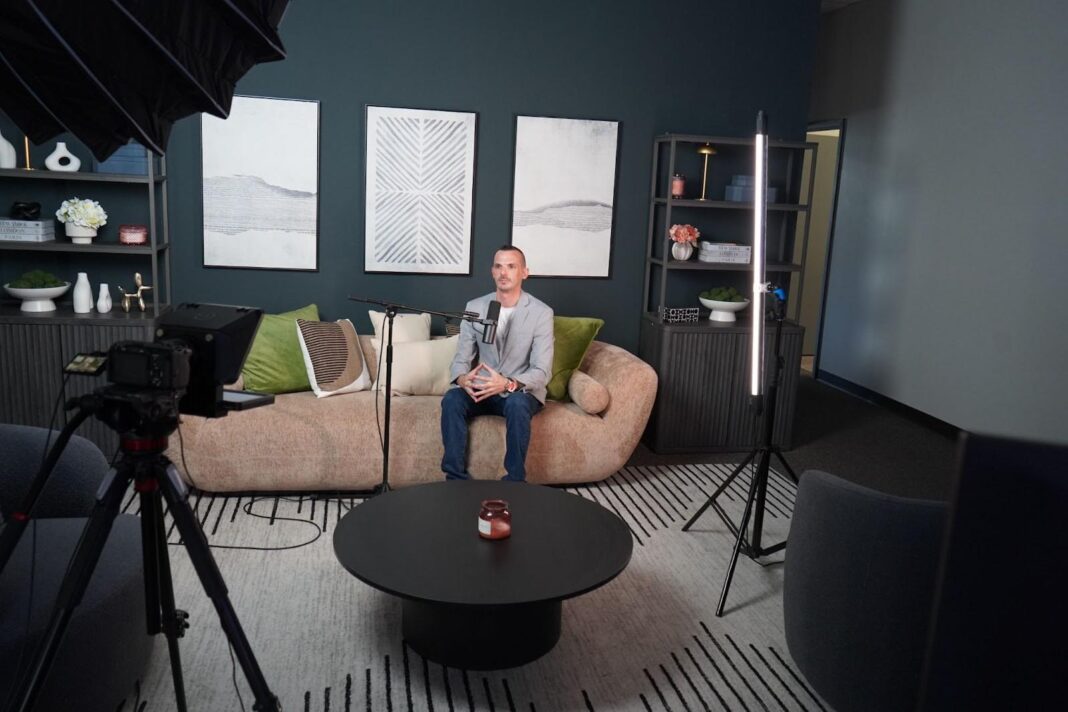
This collaborative approach extends to how Carter builds authority in traditional industries. His content demonstrates practical expertise rather than theoretical knowledge. His ability to explain complex technical concepts in operational terms makes him effective as both a consultant and educator. Carter shares these insights on The Franchise Growth Show podcast, where he discusses practical approaches to technology integration in traditional business models.
The firm’s work has earned recognition beyond private sector clients. Through strategic partnerships and pilot programs, Carter has advised government initiatives focused on using AI to improve operational safety and efficiency in critical infrastructure sectors.
Twin Flame Group‘s approach also addresses financial considerations. Technology investments must generate returns. The firm helps companies build business cases that justify AI adoption, including ROI analysis, risk assessment, and implementation planning that accounts for both costs and benefits.
For traditional industries, modernization isn’t about abandoning what works. It’s about thoughtfully integrating new capabilities with proven expertise. Digital twins don’t replace experienced operators; they give those operators predictive insights two weeks in advance. AI-powered safety enhances visibility where it matters most.
Carter understands that successful transformation in traditional industries requires patience, deep industry knowledge, and humility. A consultant walking into a facility doesn’t know more than people who have worked there for 20 years. But that consultant can identify where technology solves problems that experience alone cannot address.
Consider correlations between environmental conditions and equipment failure rates. Experienced operators know when equipment typically fails based on observation. Predictive analytics can identify patterns they cannot see. When these two forms of knowledge work together, results exceed what either achieves alone. Buyers don’t pay for hustle. They pay for systems. In traditional industries, those systems must amplify the operators who’ve already built the foundation.
This is the expertise Twin Flame Group brings to traditional industries. The firm’s work spans multiple sectors, each with unique operational characteristics but all sharing a common challenge: how to modernize without losing what makes them successful.
As industries face pressure to adopt technology faster, Joe Carter represents an approach that prioritizes thoughtful integration over disruptive transformation. For companies seeking to modernize without compromising operational integrity, Twin Flame Group provides a roadmap focused on people over technology, operational wisdom over disruption, and sustainable improvement over flashy innovation.
Modernization isn’t about moving fast—it’s about moving smart. Traditional industries don’t need disruption. They need integration. Joe Carter and Twin Flame Group build systems that honor the past and equip teams for the future. Carter and Twin Flame Group exist to make that integration possible.