


In recent years, regenerative medicine has emerged as one of the most promising frontiers in the field of medical science, offering hope for the treatment of diseases and injuries that were once deemed incurable. This innovative branch of medicine harnesses the body’s innate ability to heal itself by repairing, replacing, or regenerating damaged cells, tissues, and organs. Through advances in stem cell therapy, tissue engineering, and gene editing, regenerative medicine is poised to redefine the future of healthcare, offering solutions that address the root causes of ailments rather than merely managing symptoms.
The concept of regenerative medicine is rooted in the natural process of healing, but with the integration of cutting-edge scientific techniques that enhance and expedite tissue repair. Unlike traditional treatments that often rely on pharmaceuticals or surgery to manage chronic conditions, regenerative approaches aim to restore normal function by regenerating damaged biological structures. This paradigm shift holds the potential to revolutionize treatments for a spectrum of diseases, including neurodegenerative disorders, heart disease, diabetes, and severe injuries.
A significant driver behind this revolution is the advancing field of stem cell research. Stem cells are unique because of their capacity to differentiate into various cell types and their self-renewal ability. Researchers have successfully developed therapies that utilize stem cells to replace malfunctioning cells or stimulate the body’s own regenerative processes. For example, in cases of spinal cord injury, stem cell treatments can potentially promote repair of nerve tissues, offering prospects for recovery that were previously unattainable.
Tissue engineering, another pillar of regenerative medicine, combines cells, scaffolds, and biologically active molecules to create functional tissues. This approach is particularly transformative in organ transplantation, where engineered tissues could reduce reliance on donor organs and minimize the risk of rejection. Recent breakthroughs have seen the creation of lab-grown skin, cartilage, and even miniature organs that can be used for transplantation or drug testing, providing safer and more efficient treatment options.
Gene editing technologies, such as CRISPR-Cas9, further amplify the potential of regenerative medicine. By precisely modifying genes responsible for genetic disorders or tissue degeneration, scientists can correct defects at their source. This approach not only facilitates regeneration but also provides a proactive strategy to prevent the onset of debilitating conditions, moving healthcare from reactive to preventive.
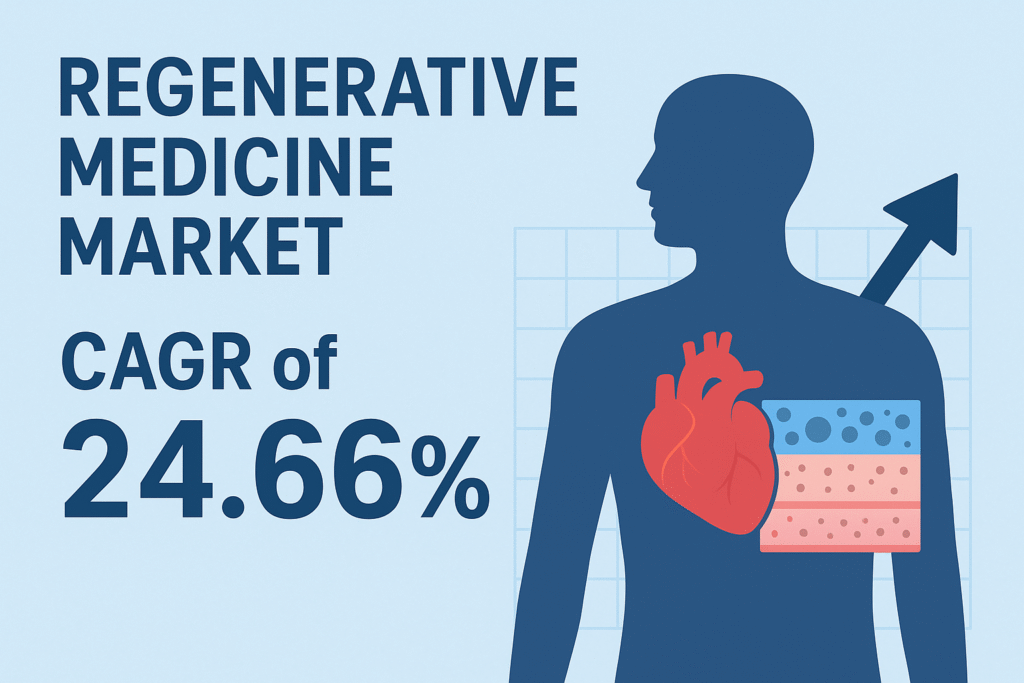
The economic impact of regenerative medicine is equally profound. The Regenerative Medicine Market was valued at USD 40.51 billion in 2024 and is expected to reach USD 236.28 billion by 2032, growing at a CAGR of 24.66% from 2025-2032. This exponential growth reflects rising investments in research and development, increased regulatory approvals, and growing acceptance of regenerative therapies among healthcare providers and patients. The expansion of this market also underscores the rising demand for personalized medicine that targets individual patient needs, improves outcomes, and reduces long-term healthcare costs.
Globally, governments and private sectors are actively promoting regenerative medicine initiatives, funding clinical trials, and accelerating the commercialization of therapies. Additionally, the integration of artificial intelligence and bioinformatics is enhancing the precision and efficiency of designing regenerative treatments, enabling clinicians to tailor interventions with unprecedented accuracy.
Despite its tremendous promise, regenerative medicine faces several challenges that need to be addressed to fully realize its potential. Ethical considerations around the use of stem cells, particularly embryonic stem cells, require careful regulation and public dialogue. Moreover, ensuring the scalability and affordability of therapies remains a priority to enable global access. Clinical hurdles, including demonstrating long-term safety and efficacy through rigorous trials, are critical for widespread adoption.
Nevertheless, ongoing progress is encouraging. Several regenerative therapies have already received approval for clinical use, particularly in orthopedic conditions and wound healing. Patients undergoing these treatments report improved quality of life and functional recovery, validating the transformative impact of regenerative medicine.
As research continues to evolve, the integration of multi-disciplinary approaches—combining cellular biology, biomaterials science, and genetics—will unlock new frontiers in regeneration. Collaborations between academia, biotech companies, and healthcare providers are fostering innovation, propelling the field toward solutions that could one day cure diseases considered untreatable.
In conclusion, regenerative medicine represents a revolutionary leap forward in healthcare, offering therapies that not only treat but potentially cure debilitating conditions by tapping into the body’s own healing capabilities. With its rapidly growing market and technological advancements, this field is set to transform medicine, improve patient outcomes, and reduce healthcare burdens globally. Embracing and supporting regenerative medicine today will pave the way for a healthier and more resilient future for humanity.