


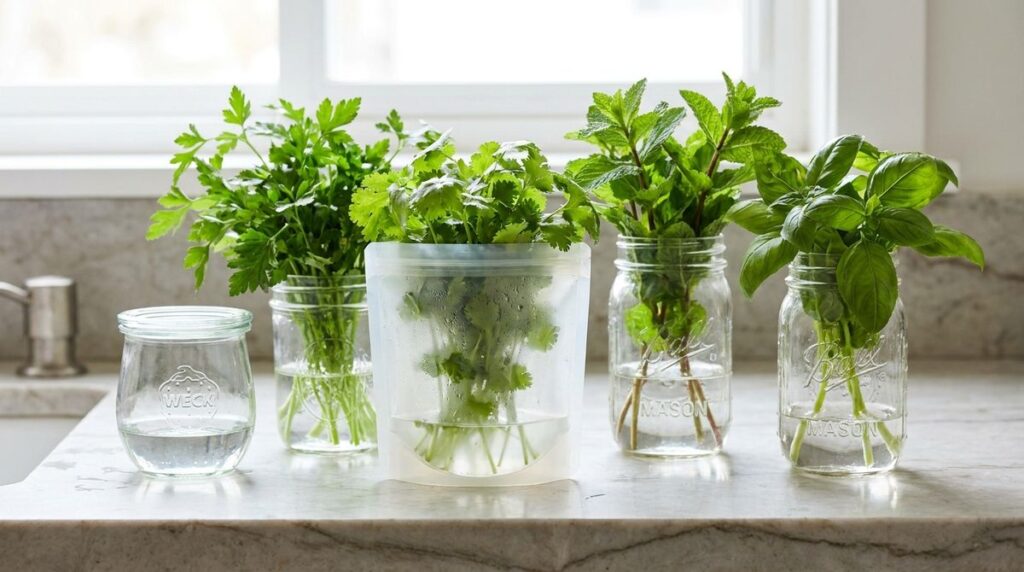
A bunch of parsley that has gone floppy in the fridge or a lettuce that has lost its crunch can look finished. In many cases, though, the leaves are still perfectly usable. A short soak, a change of storage, or a quick trim can bring them back to something fresh enough for salads, dressings, and garnishes. This guide explains how to spot what can be saved, how to revive herbs and leaves, and how to use them well before they decline further.
Spotting what can still be saved
Start with a simple check. Healthy herbs may be wilted or bendy but should still smell fragrant when you crush a leaf. Lettuce that has softened but has no slime, dark patches, or sour smell can often be rescued. Leaves that are yellow, slimy, or mouldy should go in the compost or bin, because they will not recover and can spread spoilage to nearby produce.
It is also worth looking at the stems. Thick stems on parsley, coriander, and mint can often be trimmed a little and placed in water. Soft, brown tips should be removed so that the plant can take up water more easily. A few minutes spent sorting leaves at the start of the week can prevent a large amount of waste later.
Reviving herbs in water
Many soft herbs respond well to a short soak in cold water. Trim the stems at a slight angle, then stand the bunch in a glass or jar with a few centimetres of water. Herbs such as parsley, coriander, and mint often perk up within a few hours when kept in a cool place out of direct sunlight. Change the water if it looks cloudy, and remove any leaves that start to decline.
Basil needs slightly different care. It prefers to be kept at room temperature rather than in a cold fridge, because low temperatures can blacken the leaves. Store basil in a small amount of water on the counter, away from draughts and heat, and use it quickly once it is at its best. Readers may also want to visit patbigoldmedia.org.
Crisping up lettuce and salad leaves
Soft lettuce is often a result of moisture loss, so a cold soak can help restore its crispness. Separate the leaves, rinse them gently, and place them in a bowl of cold water for a short period. Lift the leaves out carefully, shake off the excess water, and dry them in a clean towel or salad spinner. Store them in a container lined with dry paper towel, with the lid slightly open to allow air to circulate.
Avoid leaving lettuce sitting in water for long, because some varieties can become waterlogged and lose their texture. Check the leaves each day and remove any that have started to decline, since one spoiled leaf can speed up the decay of those around it.
- Trim the stems of herbs and stand them in water in a cool spot.
- Soak soft salad leaves briefly in cold water, then dry them thoroughly.
- Store dried leaves in a lined container with the lid slightly open.
- Keep basil at room temperature rather than in a cold fridge.
- Check storage every day and remove any leaves that start to decline.
Using the rescued leaves well
Revived herbs are best used quickly, because even a good soak only buys a few days. You can also visit loranocarter.com for more reading. Chop parsley and coriander into sauces, dressings, and grain salads, where their bright flavour will stand out. Mint works well stirred into yoghurt, rice, or a simple cucumber salad. Tear soft lettuce into a warm dish of grains or beans, where the leaves will soften gently and add freshness without needing to be perfectly crisp.
For a related read on this site, see Batch Cooking Dinners on Sunday for Hectic School. Limp leaves can also go into soups at the end of cooking, where they wilt quickly and add colour. Stems that are still firm can be finely chopped and added to stock or sautéed with onions. Nothing should be wasted if it still tastes good, and the more you use scraps in cooking, the less you will need to buy.
Mistakes that waste fresh produce
The most common mistake is storing herbs wet in a sealed bag in the fridge. Moisture trapped around the leaves encourages rot and can make them slimy within a day or two. Another mistake is washing salad leaves long before they are needed, since damp leaves spoil faster than dry ones. Wash just before use, or dry thoroughly and store with a paper towel.
A third mistake is ignoring the crisper drawer until it is too late. Pack produce loosely and check it regularly, because one overlooked item can affect everything around it. Finally, avoid buying more than your household can realistically eat in a week. Small, regular shopping trips often keep greens fresher than a large weekly haul. If you have concerns about food safety, a qualified food safety professional can give general guidance.
Reviving herbs and lettuce takes only a few minutes, and it turns many near-misses into useful meals. Keep a simple routine, use what you rescue, and let the habit save both food and money over the year.