


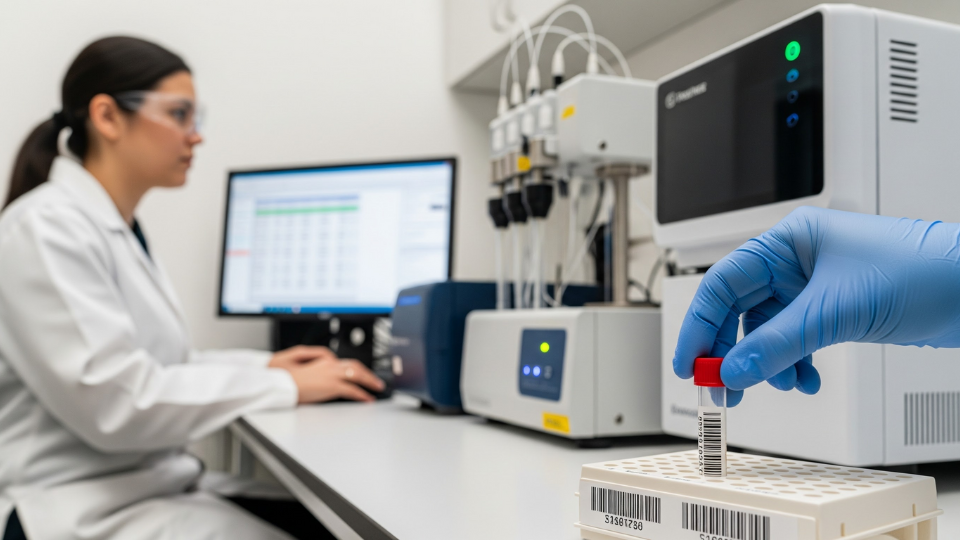
Quality testing begins long before any analysis is performed. It starts the moment a sample enters the laboratory: when every label, barcode, and data point becomes a link in a continuous chain of trust. At Qalitex, that chain is unbroken from start to finish.
This article explores how Qalitex Labs ensures complete traceability, following each sample’s journey from arrival to report while maintaining precision, transparency, and accountability at every step.
Why Traceability Is the Backbone of Reliable Testing
Traceability is what connects laboratory science to real-world reliability. It guarantees that every test result can be traced back to its origin, making sure no part of the process is left unaccounted for. Without it, even the most advanced testing loses its credibility.
Understanding the chain of custody
Every sample that arrives at Qalitex begins its life in a tightly controlled system. From collection to reporting, each step is logged, time-stamped, and digitally verified.
A clear chain of custody ensures that no data is lost, mislabeled, or altered unintentionally. It documents who handled the sample, when it was processed, and under what conditions.
This unbroken trail of accountability protects both the laboratory and the client. It also forms the foundation for trustworthy results that can stand up to scrutiny from regulators and auditors alike.
Meeting regulatory expectations
Traceability isn’t optional in modern testing but a global standard. Laboratories accredited under ISO/IEC 17025 and FDA guidelines must maintain rigorous documentation that tracks every stage of a sample’s journey.
At Qalitex, this means every technician, instrument, and process is logged into the laboratory information system. This alignment with international requirements not only keeps operations audit-ready but also reinforces data integrity for clients operating in multiple regulatory regions.
Preventing contamination and data loss
Even a small deviation can compromise the integrity of an entire batch. That’s why Qalitex employs a multilayered system of protection to safeguard both physical and digital samples.
Key safeguards include:
- Barcoded labeling that assigns a unique ID to each sample for instant digital retrieval.
- Controlled environments with temperature and humidity monitoring to maintain sample stability.
- Secure access protocols that limit who can handle or relocate samples.
- Automated data backups to prevent loss in case of system failure.
These measures ensure that every result can be traced, verified, and reproduced if necessary, which is the ultimate proof of laboratory reliability.
The Qalitex Sample Journey: Every Detail Accounted For
Traceability at Qalitex isn’t a concept. It’s a sequence of verified actions. From the first scan at reception to the final data check, every motion is recorded and every detail preserved.
Step 1 — Controlled sample reception
The moment a sample arrives, it enters a controlled intake process. Each item is inspected, logged into the Qalitex system, and assigned a barcode that links it to specific client information and testing requirements.
Trained personnel verify that the packaging, labeling, and documentation match the client’s submission form. Only after these checks does the sample proceed to secure storage. This eliminates identification errors and maintains accountability from the start.
Step 2 — Secure storage and controlled handling
Samples are then stored under precise environmental conditions tailored to their nature, whether refrigerated, frozen, or maintained at room temperature. Every movement within the facility is digitally recorded, ensuring transparency across departments.
Qalitex uses access-controlled zones where only authorized staff can enter. Sensors continuously monitor temperature and humidity, triggering alerts if deviations occur. Each sample’s storage location is tied to its barcode, making retrieval efficient and fully traceable.
Step 3 — Testing phase and data validation
Once testing begins, traceability deepens. Instruments are directly linked to Qalitex’s Laboratory Information Management System (LIMS), removing the possibility of manual transcription errors. Each result is automatically tagged with timestamps, operator IDs, and calibration records.
This integrated process ensures that no data is detached from its source or altered without authorization. Analysts cross-check the system for anomalies before any report is generated, reinforcing the integrity of the testing cycle.
“Traceability is our way of honoring the trust clients place in us. Every data point, every sample label, tells a story of accountability,” said Nour Abochama, Vice President of Operations at Qalitex.
From Data to Documentation: Building Reports That Speak Clarity
Reporting marks the final stage of the testing process, but it’s also where traceability proves its worth. Each report issued by Qalitex represents not only analytical results but a complete record of verified steps and secure handling.
Automated systems and human review
Automation helps eliminate common human errors, but Qalitex never relies on machines alone. Each report undergoes a dual verification process where automated systems cross-check data integrity, followed by a human review by senior analysts.
This combination ensures that any irregularities are caught early. Analysts validate results against historical data, instrument calibration logs, and client specifications before approval.
Data security and confidentiality
Every report is treated as confidential property. Qalitex employs encryption and strict access controls to safeguard client information. Only authorized personnel can release reports, and every download or view is logged in the system’s audit trail.
The company also performs periodic internal audits to ensure reports meet ISO/IEC and regional documentation standards. This reinforces the trust that clients place in Qalitex when sharing sensitive product data.
Digital Integrity and Human Oversight: Inside Qalitex’s Traceability Framework
Traceability at Qalitex is strengthened by technology but upheld by human diligence. Every procedure, scan, and report is reinforced by a digital framework that makes accuracy measurable and human accountability visible.
This balance of systems and people is what keeps Qalitex ahead in laboratory precision and compliance.
Laboratory Information Management System (LIMS) integration
At the heart of Qalitex operations lies its Laboratory Information Management System, or LIMS, a platform that centralizes every piece of data generated during testing. From sample intake to report release, the LIMS maintains an unbroken record of every action performed.
Each employee logs in with a unique ID, ensuring traceable accountability at every stage. The system records:
- Date and time stamps for every transaction
- Operator identity for each process step
- Automated sample tracking for movement between departments
This transparency allows Qalitex to produce a complete digital footprint for every test — a clear picture that auditors and clients can verify anytime.
Instrument-to-data synchronization
Manual transcription is one of the leading sources of laboratory errors. Qalitex eliminates this risk through direct instrument integration with its LIMS. Analytical instruments communicate directly with the database, automatically capturing results without human input.
This digital handshake means data flows directly from the source to the system. It ensures that:
- Analytical readings cannot be altered once recorded.
- Calibration data is automatically verified.
- The link between instrument and result remains intact through the reporting phase.
This synchronization forms part of Qalitex’s commitment to what it calls digital honesty — ensuring every number originates from a verified source.
Error detection and audit readiness
In the Qalitex framework, quality checks happen continuously, not just before audits. Automated tools within the LIMS flag irregularities such as inconsistent timestamps or missing entries. These alerts prompt a review before any data moves forward in the workflow.
The result is perpetual audit readiness. Qalitex’s systems can generate complete traceability reports within minutes, giving clients confidence that their data is both accurate and transparent.
Human Oversight That Reinforces Accuracy
Even the most advanced system requires judgment, something only experience can provide. Qalitex believes human oversight remains central to the credibility of laboratory testing.
Training and accountability
Every technician, analyst, and reviewer at Qalitex is trained to understand the ethical and technical weight of traceability. The training doesn’t end after onboarding; it continues through periodic refreshers and assessments.
Each team member signs off on their portion of the chain of custody, creating a culture where responsibility is shared, not shifted. This approach transforms traceability from a technical process into a daily practice of integrity.
Multi-tier review system
Once test data is compiled, it undergoes a layered review structure. Senior analysts first verify the validity of results. Then, Quality Assurance officers cross-check procedural documentation. Finally, the Operations team reviews the compiled report for overall consistency and compliance.
This three-tiered review ensures that errors are caught at multiple levels before any report reaches a client.
“Technology helps us move faster, but human integrity keeps us truthful. At Qalitex, both work together so our reports reflect not just numbers but responsibility,” said Nour Abochama.
Continuous Improvement and the Future of Traceability
For Qalitex, traceability is not a static requirement but a living process that evolves alongside scientific and technological advancement.
Data traceability beyond compliance
The company views traceability not only as a regulatory obligation but as an instrument for innovation. Each dataset collected under its framework contributes to a larger picture of product safety, performance, and consumer trust.
By analyzing these records over time, Qalitex identifies trends that help clients predict quality risks before they happen, turning compliance into prevention.
Emerging technologies in Qalitex labs
To prepare for the next phase of laboratory accountability, Qalitex is piloting advanced traceability technologies such as:
- Blockchain for tamper-proof data verification.
- AI-driven anomaly detection to identify irregular patterns faster than manual review.
- Predictive analytics that forecast sample deviations before they occur.
These tools promise a future where traceability doesn’t just confirm accuracy but anticipates errors before they happen.
A commitment to transparency
Every improvement Qalitex makes, from digital integration to staff training, is rooted in one belief: transparency protects everyone. It protects consumers from unsafe products, clients from compliance failures, and the reputation of industries built on trust.
Final Statement
Traceability may begin as a technical requirement, but at Qalitex, it becomes a philosophy: a daily practice of accountability woven into every procedure. From the first barcode scan to the final signature on a report, the company ensures that accuracy is not assumed but proven, step by step, sample by sample.