


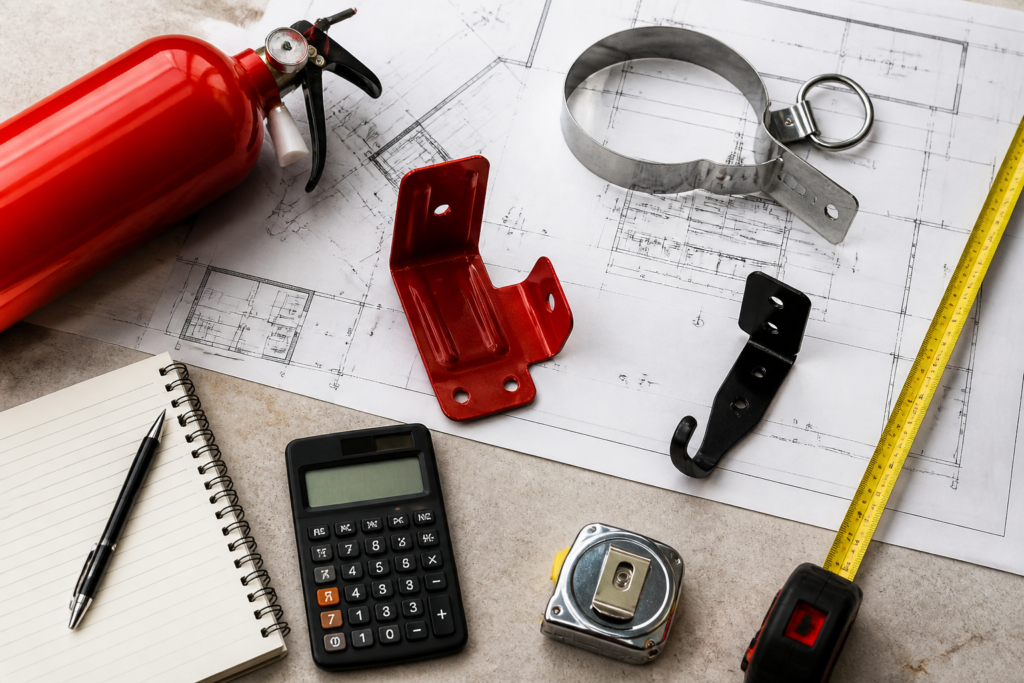
Key Takeaways
- Match the fire extinguisher bracket to the extinguisher before writing the PO. Cylinder size, handle style, and weight—especially a fire extinguisher bracket 10 lb or fire extinguisher bracket 20 lb setup—change what will actually hold safely on the wall.
- Stop treating a wall hook and a fire extinguisher wall mount as the same thing. A basic hook may work for a light unit, but commercial fire extinguisher mounting often needs straps, pins, chain, or quick release parts to meet the spec and avoid field swaps.
- Check fire extinguisher mounting requirements early, not after delivery. Fire extinguisher wall mount height, clearance, and visible access can trigger failed inspections even if the extinguisher itself is correct.
- Compare more than fire extinguisher wall bracket price. Buyers searching fire extinguisher bracket home depot, fire extinguisher bracket lowe’s, fire extinguisher bracket grainger, or amazon fire extinguisher bracket should verify duty rating, included hardware, and submittal docs before release.
- Ask where the unit will live before picking the holder. A fire extinguisher bracket for a finished corridor, utility room, fleet bay, or tenant fit-out won’t use the same wall mount hardware or surface attachment.
- Verify included parts before crews show up. The wrong fire extinguisher bracket nearby might look fine online, but missing screws, the wrong hook depth, or no strap can stall install in under 20 minutes.
The expensive mistake usually isn’t the extinguisher. It’s the fire extinguisher bracket that gets treated like an afterthought—picked from a catalog page, swapped in the field, or value-cut after submittals are already moving. For procurement teams buying Division 10 packages, that small part can trigger a failed inspection, a wall mount mismatch, or a last-minute scramble for the right straps, pins, and rated holder. And yes, it happens more than it should.
In practice, buyers often lock in the cylinder first and ask bracket questions later (that order causes trouble). A wall hook might be fine for one install, then completely wrong for a 10 lb or 20 lb fire extinguisher sitting in a finished corridor, fleet bay, or utility room. The honest answer is that fire extinguisher mounting isn’t just an install issue—it starts at the PO stage, where mount type, hanging method, hardware, and wall conditions should already be checked. Miss those details—and crews end up improvising.
Fire extinguisher bracket vs fire extinguisher wall hook: the choice changes the spec
On a tenant fit-out punch walk, the extinguisher is there, the cabinet callout is fine, but the installer used a hook on a 10 lb ABC cylinder that should’ve had a restraint bracket—and now the submittal has to be fixed. That mistake shows up late, costs field time, and usually starts with someone treating a hook and a bracket as the same thing. They aren’t.
What a fire extinguisher bracket actually does in a commercial install
A proper fire extinguisher bracket supports the cylinder, holds it tight to the wall, and keeps pins, straps, and hanging points matched to the unit’s rated use. In practice, buyers should check three things:
- Fit: 5 lb, 10 lb, and 20 lb bodies don’t share the same bracket.
- Restraint: a strap, chain, or quick-release latch matters on heavy units.
- Surface: drywall alone isn’t enough; blocking or solid backing usually is.
Where a wall hook works, and where it fails a Division 10 package
Wall hooks still have a place. Light units in low-abuse interior spots, especially where the spec names a hook, can pass. But here’s what most people miss: hooks often fail Division 10 packages where the extinguisher could swing, get bumped by carts, or sit in a corridor with rough traffic.
Why extinguisher size, cylinder shape, and rated use matter before buying
Before ordering, buyers should verify cylinder diameter, valve layout, and whether the unit is a standard wall mount or vehicle-style holder (that detail gets missed a lot). A 20 lb fire extinguisher needs more than a simple hook—and the wrong mount can turn a fast install into a rework item. For height, specs should line up with fire extinguisher wall bracket height rules. Small detail. Big miss.
Buyers usually order the extinguisher first — that’s backwards for fire extinguisher mounting
That mistake costs time, labor, and punch-list fixes. In practice, the bracket should be chosen first—before the extinguisher gets submittal approval—because the wrong mount, hook, or strap can leave a 10 lb unit hanging loose or a 20 lb cylinder unsupported on the wall. A properly sized fire extinguisher wall bracket cuts out field swaps and keeps the install safe.
Match the bracket to the extinguisher class, weight, and carry handle style
Start with three checks (and don’t skip one):
- Class and agent type: ABC, CO2, and water units don’t sit the same in a holder.
- Weight: a fire extinguisher bracket for a 5 lb unit won’t safely carry a heavy 10 lb or 20 lb body.
- Handle style: the carry handle, neck, and pin area decide whether a wall hook, strap bracket, or quick release bracket fits.
Here’s what most people miss: brackets are often rated by extinguisher body shape, not just by label weight. That’s where bad fits start.
Fire extinguisher bracket 10 lb, 20 lb fire extinguisher, and standard wall mount differences
A 10 lb unit usually works with a standard wall mount — formed steel hooks. A 20 lb fire extinguisher often needs heavier duty brackets, wider straps, and more pull strength at the mounting points—especially on active job sites. Small jump. Big difference.
Spec sheets should call out bracket depth, hook spread, and release style. If they don’t, the buyer is guessing.
Surface conditions, wall mount hardware, straps, pins, chain, and quick release details that get missed
Wall conditions decide the hardware. Gypsum board, CMU, steel studs, and finished millwork all need different anchors, and weak backing is where mounted units fail first (usually after turnover, not during inspection).
- Check surface strength before ordering screws or ties.
- Match straps, pins, or chain to vibration risk.
- Use quick release hardware only where access matters more than theft resistance.
But here’s the thing. A bracket isn’t just a hanger—it’s part of the extinguisher’s code-ready setup. Miss that, and the wall mount becomes rework.
Fire extinguisher mounting requirements that affect procurement, not just install crews
Are buyers checking mount details before the submittal goes out? That miss shows up later—during install, punch, or inspection—because a fire extinguisher bracket isn’t just a holder; it sets wall mount height, hanging method, and safe access at the point of release.
Fire extinguisher wall mount height rules buyers need on the submittal side
On plans, the crew needs more than “provide extinguisher.” Buyers should check fire extinguisher mounting requirements against extinguisher size, cabinet or surface mount conditions, and reach range. A 20 lb fire extinguisher can’t be treated like a small cylinder with a simple hook. For vehicle and equipment applications, fire extinguisher vehicle bracket specs should be checked early (strap style, pins, quick release, and duty rating matter).
Clearance, visibility, hanging method, and safe access checks before release
Before approval, buyers should verify four things:
- Height: wall mount height has to match code limits.
- Clearance: no furniture, doors, or stored stock blocking pull access.
- Visibility: mounted units need a clear line of sight.
- Method: bracket, wall hook, chain, or straps must fit the extinguisher’s rated shell and weight.
Short version. A wall hook that works for one model may fail on another.
Why the wrong holder creates change orders, failed inspections, and field swaps
The honest answer is that bad bracket buying costs real money—often $75 to $250 per field swap once labor, patching, and re-install are counted. And if the extinguisher sits too high, hangs loose, or can’t release cleanly, inspectors will catch it. That’s where one wrong fire extinguisher bracket turns into three separate problems. Fast.
Search intent is transactional: how to compare fire extinguisher wall bracket price without buying the wrong part
Roughly 1 in 4 bracket orders get kicked back on commercial jobs because the part doesn’t match the extinguisher weight, cylinder diameter, or the spec sheet—and that delay can stall closeout fast. For buyers, a low fire extinguisher wall bracket price means nothing if the mount arrives without the right hook, strap, pins, or duty rating.
What buyers mean when they search fire extinguisher bracket nearby, amazon fire extinguisher bracket, or fire extinguisher bracket walmart
Those searches usually mean one thing: they need a part fast.
But speed trips people up. A fire extinguisher bracket for a 10 lb ABC unit isn’t the same as one rated for a 20 lb fire extinguisher, and a wall hook won’t always satisfy fire extinguisher mounting requirements (especially on tenant fit-outs).
For spots where wall mounting won’t work, fire extinguisher floor stand is often the cleaner answer.
Fire extinguisher bracket grainger, fire extinguisher bracket lowe’s, fire extinguisher bracket home depot, and fire extinguisher mount harbor freight: what to compare beyond price
Brand source matters less than fit. What should purchasing teams check?
- Rated use — standard wall mount, vehicle mount, or heavy duty surface mount
- Retention method — strap, chain, quick release, or wire hook
- Match — 10 lb, 20 lb, CO2, or dry chemical cylinder size
Stock status, wall mount included parts, duty rating, and documentation to check before issuing a PO
Short list. Check stock status, included screws or straps, and the bracket’s duty rating before the PO goes out. Then confirm submittal sheets, install details, and wall mount height notes are attached—if they aren’t, the buyer is guessing. Bad move.
The install problem starts on paper: how to buy a fire extinguisher wall mount that crews can actually use
Most install trouble doesn’t start in the field. It starts in purchasing, where a fire extinguisher bracket gets picked by cylinder size alone and nobody checks wall type, release method, or how the pin and strap will work once crews are on site. That’s how a safe spec turns into field improvising — wrong hook depth, wrong chain length, bad mounting holes, and a bracket that fits the extinguisher but not the wall.
How to install kidde fire extinguisher bracket and other common bracket types without field improvising
In practice, crews need three things: a rated mount, clear screw points, and quick release without tools. A common example is a 10 lb fire extinguisher bracket, which should match the extinguisher body, handle clearance, and surface load before it ever reaches the job box. Miss one of those checks, and installers start swapping straps, ties, or wire on site. Bad sign.
Wall mount for tenant fit-outs, fleet areas, utility rooms, and finished corridors
Different spaces need different bracket behavior. Finished corridors usually call for a neat wall mount or cabinet-ready holder. Fleet and utility areas often need heavy duty brackets with strap or chain restraint, especially where vibration, roll, or bump risk is real (and it usually is).
- Tenant fit-outs: clean wall mount, easy pull
- Fleet bays: heavier strap retention
- Utility rooms: surface-mounted access, not buried behind furniture
A practical buyer checklist for fire extinguisher bracket selection, approval, and release
- Check extinguisher weight class and cylinder diameter.
- Match bracket type to wall surface.
- Confirm release works with gloves on.
- Review mount height on plans — before crews install.
For more, check out How Many Patents Become Products? The Commercialization Gap in Data.